
 Pakistan’s leaders hail first astronaut aboard Chinese craft: ‘Proud one of us has gone into space’
 British tourist travels 29 hours from Mumbai to Amritsar for ₹5,461, rates Indian Railways 10/10 | Viral video
 The Supreme Court will decide whether assault weapons bans violate the Second Amendment
 A Critic of Beijing Falls Short in Taiwan’s Key Mayoral Election
 EPA says no rise in contamination after Army detonates lead azide stockpile in Iowa
Houthis attack Saudi capital, damaging PIF tower.
**
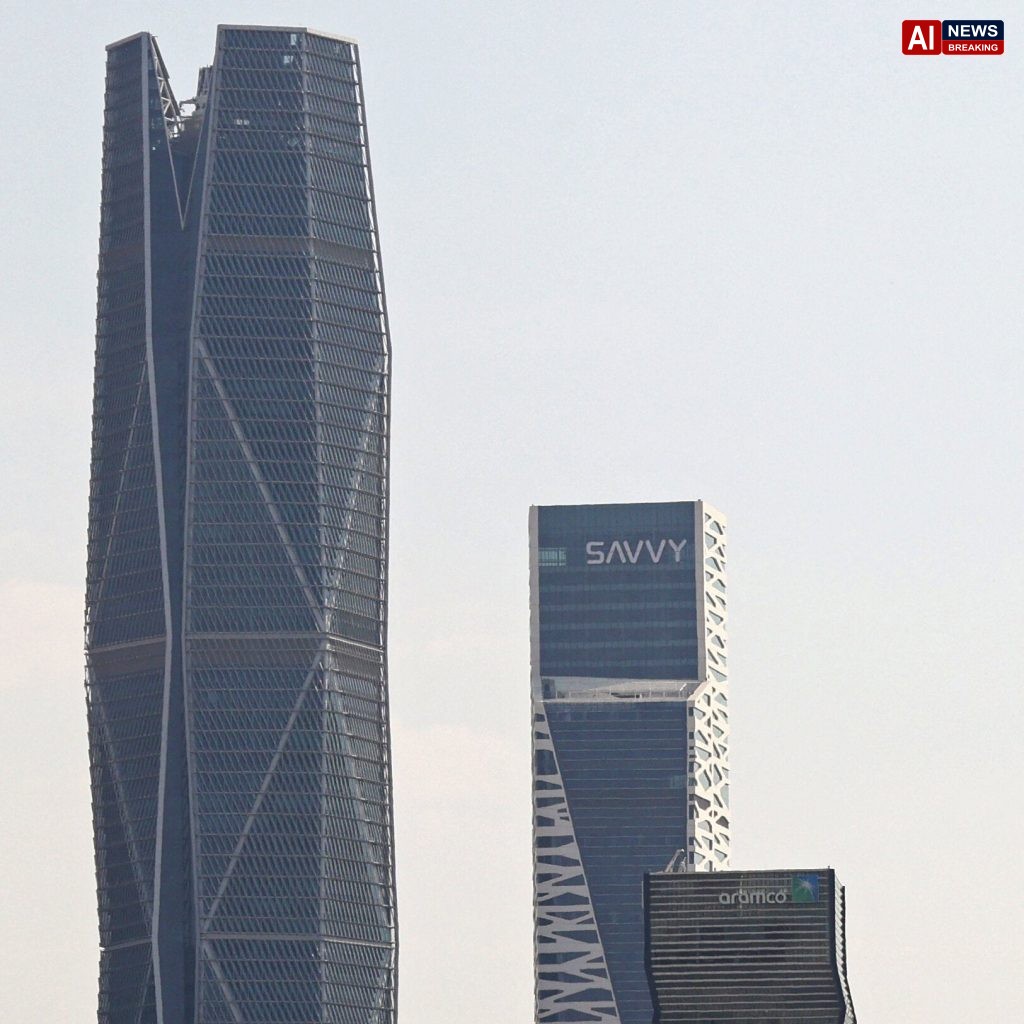
Saudi Sovereign Wealth Fund Tower Damaged as Houthis Attack Riyadh - AI News Breaking
Saudi Sovereign Wealth Fund Tower Damaged as Houthis Attack Riyadh The Saudi capital of Riyadh was rocked by an armed assault when missile fire from the Houthi movement in Yemen struck a towering office building that houses the Public Investment Fund (PIF), the country’s sovereign wealth entity. The impact shattered windows across several floors, sending glass raining down onto the streets below, and left the iconic tower partially collapsed. Security forces were quick to respond, sealing off the surrounding area and evacuating staff in a controlled, orderly manner that avoided further casualties..
The attack, which began in the early evening, saw a barrage of anti‑aircraft rockets launched from a remote area of Yemen. Intelligence reports confirm that the missiles were guided by Houthi drones that had been used in previous campaigns against Saudi infrastructure. The PIF tower, situated in the heart of the city’s financial district, was not a military target but a high‑profile symbol of Saudi economic ambition, and its damage has reverberated across the region’s financial markets..
The Saudi Ministry of Interior reported that no fatalities were confirmed at the time of writing, though several employees were injured during the evacuation. Emergency medical teams were on standby, and the nearest hospital received the injured patients for treatment. The city’s traffic was disrupted as authorities closed several major arteries to facilitate the movement of emergency services and to prevent the spread of damage..
In a statement released by the PIF, officials expressed their condolences to the victims’ families and pledged a comprehensive review of security protocols. “We are committed to ensuring the safety of our staff and partners,” the statement read. The organisation also highlighted its plans to accelerate the implementation of advanced surveillance systems throughout its facilities, a move that will likely influence security standards across the Kingdom’s public and private sector..
The incident comes amid a broader geopolitical escalation that has seen Saudi Arabia and its allies increase military support to the United Arab Emirates and Qatar in response to the Houthi incursion. Analysts suggest that the attack could be part of a wider strategy aimed at destabilising Saudi infrastructure and undermining investor confidence. In the past months, the Houthis have claimed responsibility for a series of missile attacks on oil facilities and airbases, further demonstrating their capacity to project power across the Arabian Peninsula..
The PIF, which manages a portfolio worth roughly $400 billion, is one of the world’s most significant sovereign funds. It has played a pivotal role in Saudi Arabia’s Vision 2030 initiative, which seeks to diversify the nation’s economy beyond oil. Damage to its headquarters is not merely symbolic; it threatens to disrupt the fund’s day‑to‑day operations and could trigger a reassessment of risk management practices within the kingdom’s financial sector..
The Royal Saudi Air Force scrambled fighter jets in response to the missile launch. According to the defence ministry, the jets intercepted and destroyed the incoming missiles before they reached the city. This rapid response is being lauded by officials as a testament to the Kingdom’s robust air defence capabilities..
However, the fact that the missiles managed to breach the city’s perimeter underscores the evolving nature of asymmetric threats that challenge conventional security frameworks. International reactions have been swift and largely supportive of Saudi Arabia’s right to defend itself. The United States Department of State issued a statement condemning the attack and pledging continued support for Saudi security measures..
Meanwhile, the United Nations Security Council is expected to convene an emergency session to discuss the escalation of hostilities in the region and to call for a de‑escalation of the conflict between the Saudi-led coalition and the Houthis. The financial markets reacted immediately to the news. The Saudi stock exchange, the Tadawul, experienced a brief dip as traders weighed the potential impact of the attack on the PIF’s investment strategies..
However, the market recovered within hours, buoyed by a broader confidence in the Saudi government’s crisis management and the resilience of its economic reforms. Global investors are closely monitoring the situation, as any prolonged instability could affect commodity prices and the investment climate in the Gulf. In the days that follow, the government has announced plans for a comprehensive review of all critical infrastructure in the capital..
Security upgrades are slated to include the deployment of additional radar systems, reinforced building materials, and enhanced cyber‑defence mechanisms to detect and thwart future missile launches. The PIF has also pledged to invest in community outreach programmes aimed at fostering greater public awareness of security protocols and emergency response procedures. The incident has sparked a renewed debate within Riyadh’s business community about the need for resilient infrastructure in the face of growing geopolitical volatility..
Industry leaders are calling for public‑private partnerships to strengthen critical assets, including power grids, transportation hubs, and financial institutions. The government, in turn, is exploring incentives for companies that invest in advanced security technologies and disaster‑resilience measures. As the Riyadh cityscape slowly returns to normal, the nation remains vigilant..
The incident has served as a stark reminder that even the most fortified symbols of national pride are not immune to the reach of modern warfare. The PIF tower’s restoration will likely become a symbol of resilience, reflecting the Kingdom’s determination to maintain its economic trajectory despite the challenges posed by regional instability..
Updated: November 19, 2026
The PIF tower’s hit is less a strike on a building than a blow to the image that Saudi Arabia is reshaping its economy—any hint of vulnerability risks a ripple of doubt among investors. Even with air‑defence successes, the attack forces a reckoning: resilience must blend technology, infrastructure







