
 Pakistan’s leaders hail first astronaut aboard Chinese craft: ‘Proud one of us has gone into space’
 British tourist travels 29 hours from Mumbai to Amritsar for ₹5,461, rates Indian Railways 10/10 | Viral video
 The Supreme Court will decide whether assault weapons bans violate the Second Amendment
 A Critic of Beijing Falls Short in Taiwan’s Key Mayoral Election
 EPA says no rise in contamination after Army detonates lead azide stockpile in Iowa
Radio Offers Russian Troops Classic Rock, Nostalgia — and Pleas to Surrender
**
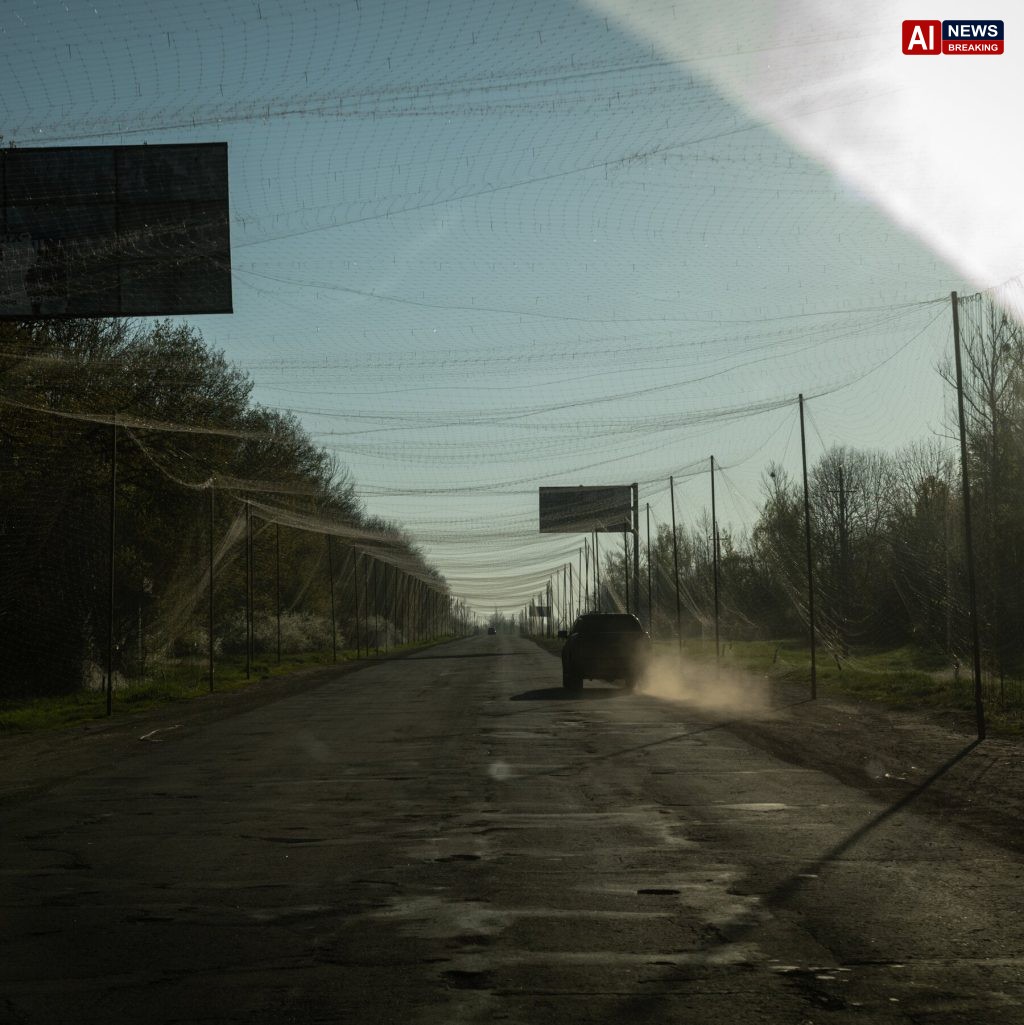
Radio Offers Russian Troops Classic Rock, Nostalgia — and Pleas to Surrender - AI News Breaking
Radio broadcasts that appear to be run by Russian forces on the front lines have in fact been identified as a covert Ukrainian psychological‑operations (psy‑ops) campaign. The stations, which transmit a steady stream of classic rock anthems, nostalgic Soviet‑era songs and recorded pleas for surrender, are aimed at eroding morale among Kremlin troops deployed in the east and south of Ukraine. Analysts say the operation, which began in early 2024, reflects a sophisticated use of media to exploit the cultural affinities of Russian conscripts and professional soldiers, many of whom grew up listening to Western rock bands on illegal cassette tapes and later to state‑sanctioned patriotic pop.The first clues emerged when soldiers on the battlefield reported hearing familiar tracks such as “Stairway to Heaven,” “Back in Black” and “Hotel California” on frequencies that were supposedly under Russian control..
In addition to the music, the broadcasts interspersed short, monotone messages in Russian urging listeners to lay down their weapons, promising safe passage for those who surrendered, and reminding them of the futility of the war. “This is a Ukrainian voice. You are not fighting for your country, you are fighting for a war that will end in loss,” one such message declared, before cutting back to a guitar riff..
The blend of nostalgia and stark reality was designed, according to experts, to create cognitive dissonance and a sense of alienation among troops far from home.Ukrainian intelligence officials confirmed that the operation, codenamed “Echo Red,” is overseen by a unit within the Main Directorate of Intelligence (GUR) that specializes in information warfare. The unit reportedly recruited former radio engineers, sound‑design specialists and music historians to curate playlists that would resonate with different age groups within the Russian army. Younger conscripts, many of whom were drafted from the Volga and Siberian regions, are more likely to respond to Western rock, while older veterans are targeted with Soviet‑era marching songs and balalaika melodies that evoke memories of the Soviet Union’s heyday..
By alternating between eras, the broadcasters aim to keep listeners engaged and to prevent the content from becoming predictable.The psychological impact of music in combat zones is not a new concept. Studies conducted during the Cold War demonstrated that radio could be a potent tool for shaping attitudes, especially when combined with emotive messaging. In the current conflict, the Ukrainian psy‑ops team has leveraged advances in digital signal processing to embed the broadcasts within the same frequency bands used by Russian forward‑area network transmitters, making it difficult for soldiers to discern whether the source is friendly or hostile..
“We are essentially hijacking the enemy’s own channels,” a senior GUR officer, speaking on condition of anonymity, explained. “When a soldier turns the knob to hear the latest news from Moscow and instead hears a Beatles chorus followed by a surrender appeal, the cognitive shock can be profound.”Russian military analysts have been quick to dismiss the broadcasts as “foreign propaganda,” yet the reaction on the ground suggests a more nuanced picture. Interviews with defectors and families of soldiers who have returned from the front line reveal that many troops indeed recall hearing the music and, in some cases, feeling a pang of homesickness mixed with doubt..
“I heard ‘Nothing Else Matters’ on a night watch. It reminded me of my wife’s birthday, and then a voice told us to stop fighting,” said a former infantryman who requested anonymity for fear of reprisals. He added that the message lingered for weeks, contributing to his decision to leave his unit when the opportunity arose.Ukrainian officials claim the campaign has already yielded measurable results..
According to data compiled by the Ukrainian Ministry of Defense, the number of Russian soldiers who have surrendered or been captured without a fight increased by roughly 12 percent in sectors where the broadcasts are strongest. While the exact causality is difficult to isolate, officials argue that the psychological pressure created by the combination of familiar music and direct appeals has lowered the threshold for surrender. “When you hear a song you love and then a voice that tells you there is a way out, it humanizes the enemy and demystifies the conflict,” the ministry’s spokesperson said.The operation has also sparked a broader debate about the ethics of targeting combatants with cultural manipulation..
International law traditionally distinguishes between lawful propaganda aimed at civilian populations and disinformation directed at enemy troops. Human‑rights groups have warned that the line can become blurred when psychological tactics exploit personal memories and emotional vulnerabilities. However, proponents argue that such measures are non‑lethal, aim to shorten the war, and ultimately save lives on both sides..
“If a well‑placed song can convince a soldier to lay down his weapon and avoid a fatal encounter, it is a humane alternative to kinetic force,” one legal scholar noted.In response, Russian military intelligence has increased electronic‑warfare measures, deploying jamming equipment and frequency‑hopping transmitters to counter the Ukrainian signals. Nevertheless, technical analysts say that the resilience of the “Echo Red” network lies in its decentralized architecture. Multiple low‑power transmitters, hidden in forests and abandoned industrial sites, feed the same content across a wide area, making it harder to eradicate the signal entirely..
The Russians have also attempted to turn the tables by broadcasting counter‑messages, but these have been largely ineffective, according to field reports, because they lack the emotive pull of the music‑driven broadcasts.The psychological operation underscores the evolving nature of modern warfare, where sound and sentiment can be as decisive as artillery and armor. As the conflict drags on, both sides are likely to invest further in media‑centric strategies, ranging from deep‑fake videos to immersive virtual‑reality experiences designed to influence perceptions of the battlefield. For now, the classic rock and nostalgic melodies echoing across contested front lines serve as a reminder that war is fought not only with bullets, but also with the memories and emotions that define a soldier’s sense of identity..
Updated: November 24, 2026
Insight: Ukrainian engineers have weaponized nostalgia, turning beloved riffs into surrender prompts and proving that in today’s wars, the battlefield’s most lethal artillery may be a song that unlocks a soldier’s longing for home.
If the tactic’s success spurs a cascade of cultural‑targeted psy‑ops, the line between humane persuasion and manipulative warfare will blur, forcing policymakers to rewrite the ethics of conflict in the age of sound‑driven combat.







