
 Pond heron found dead in Coimbatore tests positive for avian influenza
 Pakistan’s leaders hail first astronaut aboard Chinese craft: ‘Proud one of us has gone into space’
 British tourist travels 29 hours from Mumbai to Amritsar for ₹5,461, rates Indian Railways 10/10 | Viral video
 The Supreme Court will decide whether assault weapons bans violate the Second Amendment
 A Critic of Beijing Falls Short in Taiwan’s Key Mayoral Election
Cabinet nod to development of Yuge Yugeen Bharat Museum with project cost of 3,230 crore
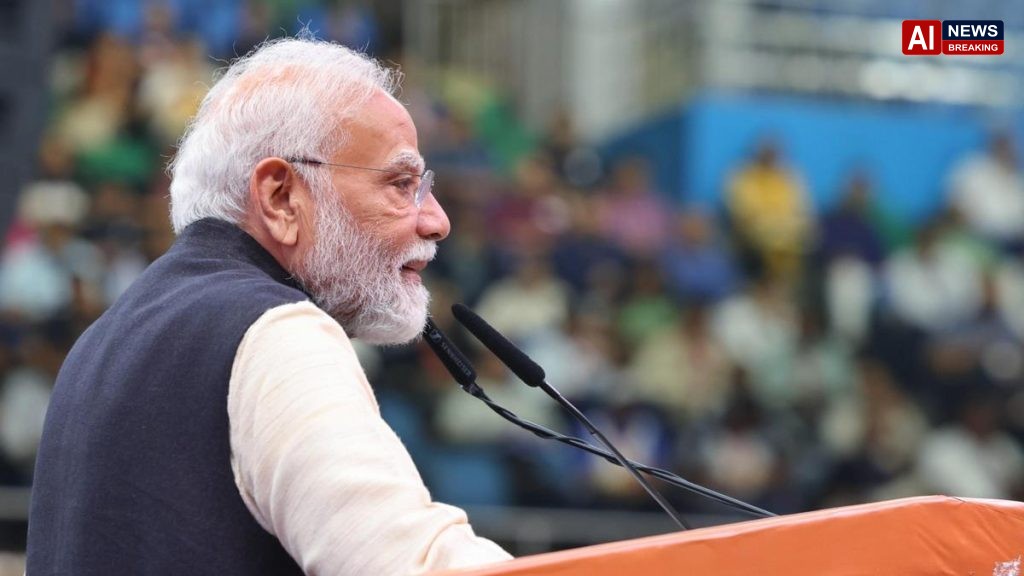
Cabinet nod to development of Yuge Yugeen Bharat Museum with project cost of ₹3,230 crore - AI News Breaking
cabinet development yuge yugeen:
The Union Cabinet has approved the development of the Yuge Yugeen Bharat Museum, a flagship cultural project slated to cost 3,230 crore rupees. The decision follows a series of consultations with cultural experts, heritage professionals and state representatives, who all emphasised the need for a modern museum that encapsulates India’s long and varied civilisational narrative. In the brief, officials highlighted that the new museum would aim to present a holistic account of India’s tangible and intangible heritage, weaving together artifacts, stories, performances and interactive displays in a way that reflects the country’s plurality.The museum’s concept, described as an “integrated narrative of tangible and intangible cultural heritage,” seeks to showcase the continuum of Indian civilisation from the Indus Valley to contemporary times..
It will cover the evolution of art, architecture, music, dance, craft, cuisine and social practices across the subcontinent. Rather than presenting a linear chronology, the layout will reflect thematic intersections – such as the role of water, the spread of trade, or the influence of religion on daily life. By juxtaposing the tangible – sculptures, textiles, manuscripts – with the intangible – oral histories, folk songs, rituals – visitors are expected to experience a more nuanced understanding of the cultural tapestry that has defined India for millennia.According to the Ministry of Culture, the museum is to be located in the historic heart of Delhi, a city that itself is a living museum of layered cultures..
The chosen site, a former colonial complex, has already been earmarked for adaptive reuse, allowing the new structure to blend seamlessly with existing heritage buildings while providing modern exhibition spaces. The layout will incorporate glass facades, open courtyards and digital kiosks, allowing visitors to engage with the displays from multiple angles. In addition to permanent galleries, the museum will host rotating exhibitions that focus on specific regional traditions, contemporary artists and themes such as climate change, gender and migration, thereby keeping the experience fresh and relevant.The project cost of 3,230 crore rupees has been broken down into design, construction, curatorial services and technology integration..
The Ministry estimates that about 40 percent of the budget will cover construction of the main building and its surrounding landscape. Curatorial and research fees are projected at 25 percent, with the remainder allocated to procurement of artefacts, installation of high‑security systems and the development of digital platforms. Officials have assured that the funding will be sourced from a mix of central allocations and public‑private partnerships..
They have also highlighted that the museum will create jobs, both during construction and in its long‑term operations, offering opportunities for curators, conservators, technicians and educators.In a statement, Minister of Culture Rajesh Kumar said the museum would “serve as a bridge between the past and the present, inviting citizens to explore the stories that shape their identities.” He added that the project aligns with the government’s broader cultural revival agenda, which aims to preserve heritage sites, promote traditional crafts and support cultural education. The minister also noted that the museum would be accessible to people of all ages and backgrounds, with free entry for school and college students and a range of guided tours in multiple languages.The museum’s design team is composed of several renowned architects and heritage planners, including a joint venture between a local firm and an international museum consultancy. The architects are tasked with creating a structure that not only meets contemporary museum standards but also respects the historic fabric of the surrounding area..
Early sketches reveal a blend of glass, timber and stone, with large atriums and interactive zones that allow for live performances and workshops. The building will also incorporate sustainable features such as rainwater harvesting, solar panels and a green roof, in line with the government’s environmental objectives for public infrastructure.Curatorial input will come from a panel of scholars and practitioners representing the diverse cultural traditions of India. Meera Nair, a professor of South Asian studies, will oversee the acquisition of artefacts, the design of narratives and the integration of digital storytelling tools..
The museum’s collection policy will prioritise regional provenance and community involvement, ensuring that artefacts are displayed within their cultural contexts and that local communities are consulted about their representation. The curators will also work closely with technology specialists to develop augmented reality overlays that can bring ancient sites to life for visitors in the gallery.Public engagement is expected to be a key component of the museum’s mission. The project will feature a series of outreach programmes, including school visits, community exhibitions and collaborative projects with cultural organisations..
The Ministry has also announced the establishment of a digital archive, accessible through a dedicated website, which will allow users to explore the museum’s collections virtually. The digital platform will offer high‑resolution images, 3D models and audio recordings, making the museum’s resources available to a global audience and supporting researchers worldwide.The Cabinet’s approval was welcomed by several cultural associations and heritage activists. A spokesperson for the Indian Association of Museums said the museum “will be a landmark for the preservation of our shared heritage and a catalyst for cultural tourism.” However, some critics raised concerns about the allocation of public funds, suggesting that resources could alternatively be directed to the restoration of smaller, less prominent heritage sites..
In response, the Ministry stated that the Yuge Yugeen Bharat Museum will act as a flagship project, setting standards for future museum developments across the country and providing a model that can be replicated at regional scales.The museum’s opening is expected to take place in 2026, after a four‑year construction and curation phase. In the interim, the Ministry has announced plans to host a series of temporary exhibitions in existing venues to build public interest and gather feedback on the proposed narratives. These exhibitions will focus on topics such as the Silk Route, indigenous music and the legacy of colonialism, providing a glimpse into the type of integrated storytelling that will be central to the permanent galleries.Beyond its domestic impact, the museum is poised to become an international cultural hub..
By showcasing India’s heritage to a worldwide audience, it aims to strengthen cultural diplomacy and foster cross‑cultural dialogue. The Ministry has already initiated contacts with institutions in Europe, North America and Southeast Asia to explore collaborative exhibitions and academic exchanges. These partnerships are expected to bring international scholars and artists to the Yuge Yugeen Bharat Museum, enriching its programmes and expanding its reach.In summary, the Union Cabinet’s nod to the Yuge Yugeen Bharat Museum marks a significant investment in India’s cultural infrastructure..
With a budget of 3,230 crore rupees, a comprehensive design and curatorial plan, and a clear focus on integrating tangible and intangible heritage, the project promises to become a landmark for both national identity and global cultural engagement. The museum’s development will not only preserve the past but also create an inclusive space.
Updated: November 11, 2026
Summary: Cabinet approval of the Yuge Yugeen Bharat Museum earmarks ₹3,230 crore to build Delhi’s flagship cultural hub, blending tangible artefacts with intangible narratives through interactive, digital displays. The project, slated to open in 2026, aims to showcase India’s heritage from the Indus Valley to the present, while boosting employment, education and international cultural exchanges.
India’s cultural capital will now mirror its own political ambition—spending a billion rupees to construct a museum that brands a nation’s heritage as a unified, marketable narrative risks flattening the very pluralism it seeks to celebrate.
By positioning the museum as a flagship, the government is betting that a single, high‑profile institution will set a precedent for regional projects, but it may also divert scarce resources from the countless smaller sites whose stories could otherwise foster grassroots cultural






