
 Pakistan’s leaders hail first astronaut aboard Chinese craft: ‘Proud one of us has gone into space’
 British tourist travels 29 hours from Mumbai to Amritsar for ₹5,461, rates Indian Railways 10/10 | Viral video
 The Supreme Court will decide whether assault weapons bans violate the Second Amendment
 A Critic of Beijing Falls Short in Taiwan’s Key Mayoral Election
 EPA says no rise in contamination after Army detonates lead azide stockpile in Iowa
FAA ground stop throws college football into chaos, while the NFL is safe
**
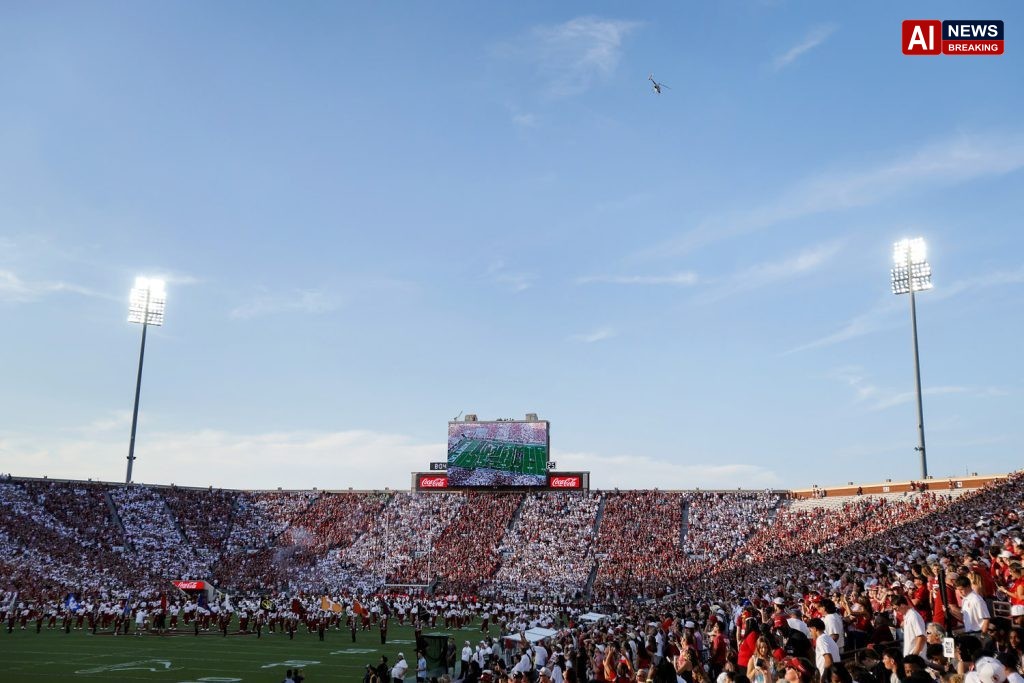
FAA ground stop throws college football into chaos, while the NFL is safe - AI News Breaking
The Federal Aviation Administration’s decision to halt all scheduled commercial air traffic at 4.15 a.m. on Friday, New York, and the following day, led to the cancellation of over 7,000 flights across the United States and a wave of disruptions for sporting events scheduled for the weekend. The abrupt ground stop, which was triggered by a serious security threat linked to the U.S..
Service’s protective detail, left teams in the National Football League and the College Football Association scrambling for alternatives to reach their destinations on time.At the heart of the matter is the sheer scale of the ground stop. With thousands of flights canceled, teams that rely on commercial travel to move players, coaches, support staff, and equipment found themselves in a bind. While the NFL, with its highly centralized operations and dedicated transport assets, managed to keep most of its scheduled games intact, college teams—especially those in the Football Bowl Subdivision—were forced to seek emergency solutions, often at significant cost.The NFL’s internal logistics network, which includes charter jets and a fleet of company-owned vehicles, was able to accommodate a majority of the affected teams..
According to a spokesperson for the league, “We had contingency plans that allowed us to move our teams without interruption.” The league’s executive office, which coordinates travel for all 32 teams, deployed an emergency response team that coordinated with airlines and private jet operators to secure last‑minute flights. While a handful of smaller teams experienced a delay, the overall impact on the schedule was minimal, with only one game postponed at the end of the first week of the season.College football, in contrast, is highly fragmented in terms of travel arrangements. Most programs rely on commercial airlines for transportation and often book flights weeks in advance..
The sudden cancellation of flights meant that many teams had to rely on charter services that are rarely used outside of emergencies. The University of Alabama, for instance, had to scramble to arrange a charter flight for its senior quarterback and key coaching staff after its flight to Birmingham was canceled. The cost of such a flight, estimated at $12,000, was an unexpected expense that the program’s athletic department had to absorb.Beyond the immediate travel disruptions, the ground stop also threatened to ripple through the rest of the sports calendar..
The National Collegiate Athletic Association (NCAA) announced that it would postpone its annual spring practice sessions, which are critical for player development and injury prevention. The decision was made in consultation with the NCAA’s compliance and health and safety divisions, which highlighted the increased risk of players traveling under uncertain conditions.The economic fallout from the ground stop has already begun to surface. Several major venues, which rely on revenue from ticket sales, concessions, and parking, have reported that the disruption could result in a loss of up to $2 million in revenue for the weekend..
The Associated Press quoted an executive from the University of Southern California (USC) who noted, “We had to pay for last‑minute accommodations and transportation for players and staff, and the financial hit is significant.” In addition, the cost to the NCAA’s board of directors has been estimated at $500,000 in administrative expenses related to the cancellation and rescheduling of events.The FAA’s decision to initiate the ground stop was rooted in a security concern that the agency said could not be fully assessed in the limited time before the flights were scheduled. Service had identified a possible threat that required a pause in all flight operations to protect passengers and crew. The agency has stated that it is currently investigating the root cause of the threat and has pledged to provide more information in the coming days..
The FAA’s spokesperson explained that the decision was made “in the interest of public safety, and not to disrupt the economy or the sporting calendar.”In the wake of the ground stop, several teams have called for a review of the coordination between airlines, sports leagues, and federal agencies. “We need better communication and a more reliable contingency plan,” said a spokesperson for the University of Texas. The University’s athletic director pointed out that the current reliance on commercial flights is a vulnerability that has become more apparent in the face of unexpected disruptions..
The NCAA has responded by announcing that it will work with the FAA to establish a “sporting transport liaison” program that would facilitate real‑time updates for teams traveling for games.While the immediate impact on the NFL’s schedule was minimal, the league’s executives acknowledged that the ground stop could have led to a cascade of delays if the problem had persisted for longer. In the event of an extended ground stop, the NFL has a plan to move its teams to alternate airports, but the league noted that the cost of doing so could be significant. The league’s president said, “The ground stop has put us on our toes, but we have a system in place that is designed to keep the season running.”For college teams, the disruption was more tangible..
The University of Florida’s head coach, who had scheduled a preseason training camp in Atlanta, was forced to relocate the camp to Gainesville. The move resulted in a $75,000 cost increase, and the coach acknowledged that the players’ experience was impacted by the sudden change of venue. “We’re grateful that we could get the camp going, but it’s not what we had planned,” he said..
The coach’s comments echoed a sentiment that has been shared by many collegiate programs across the country.The ground stop also highlighted a broader issue in the sporting community: the dependence on air travel and the limited alternatives for teams that operate on tight budgets. In the years since the COVID-19 pandemic, many teams have already begun to explore more flexible travel arrangements, but the current disruption has forced a re‑examination of those strategies. The NCAA has pledged to investigate ways to mitigate the impact of future travel disruptions, including developing a shared transportation resource pool that would allow teams to pool resources for shared travel.In the long term, the incident may spur changes in how the sports industry collaborates with federal agencies to manage emergencies..
The FAA and the NCAA have agreed to meet to discuss protocols that would minimize the impact of future flight cancellations on sporting events. The meeting will likely focus on establishing a formal communication channel for real‑time updates and a rapid response system that would allow teams to pivot quickly in the event of a ground stop.The ground stop has also had a human impact. Several athletes have reported frustration with the disruption to their travel plans..
A senior player for the University of Arkansas, who was traveling to a game in Lexington, said that the sudden cancellation of his flight meant he missed a pre‑game practice. “It’s frustrating because you’ve planned your week around these games,” he said. The player’s experience underscores the broader emotional toll that such disruptions can have.
Updated: November 14, 2026






