Pakistan’s leaders hail first astronaut aboard Chinese craft: ‘Proud one of us has gone into space’
 British tourist travels 29 hours from Mumbai to Amritsar for ₹5,461, rates Indian Railways 10/10 | Viral video
 The Supreme Court will decide whether assault weapons bans violate the Second Amendment
 A Critic of Beijing Falls Short in Taiwan’s Key Mayoral Election
 EPA says no rise in contamination after Army detonates lead azide stockpile in Iowa
ICJ rules Myanmar breached Genocide Convention against Rohingya.
**
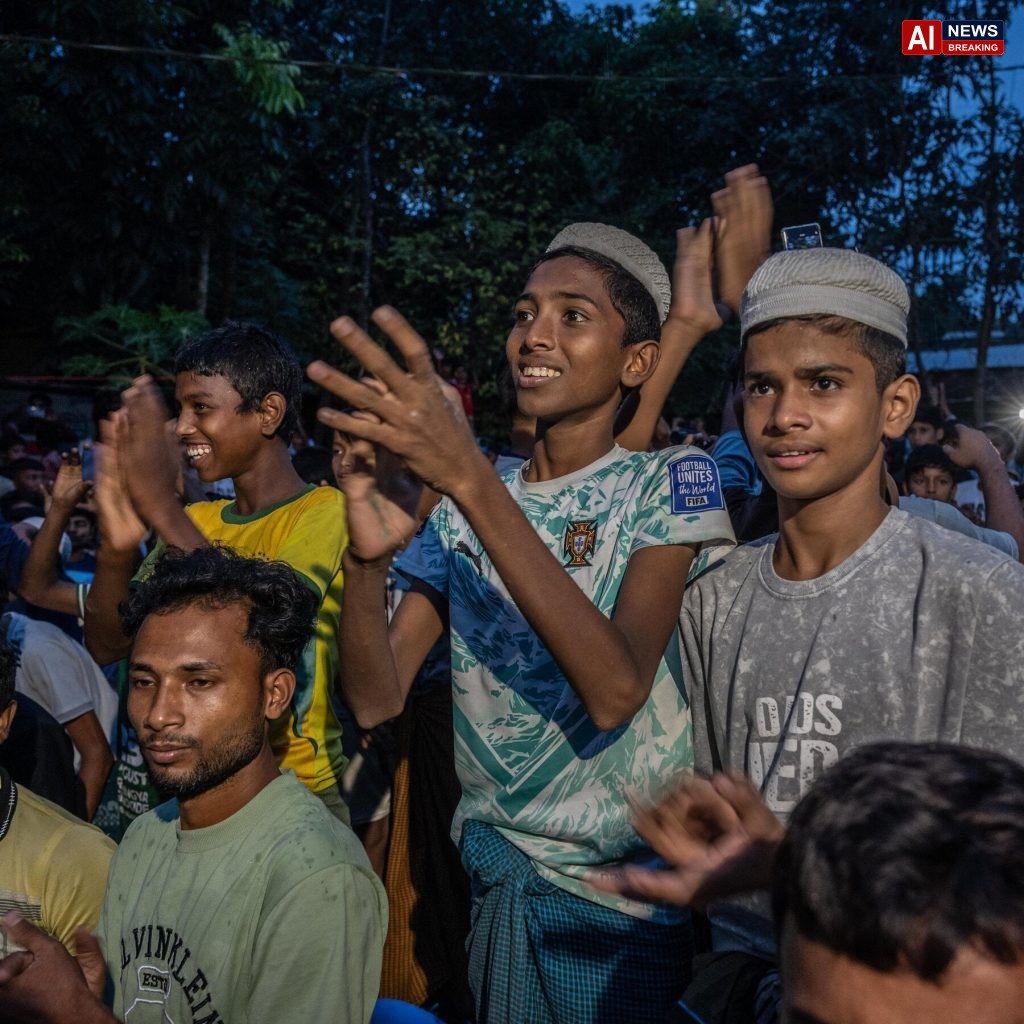
Live Updates: U.N. Court Rules Myanmar Committed Genocide Against Rohingya - AI News Breaking
Court Rules Myanmar Committed Genocide Against Rohingya The International Court of Justice (ICJ) delivered a landmark judgment on Thursday, finding that Myanmar has breached the 1948 Genocide Convention by committing acts of genocide against the Rohingya Muslim minority. The decision marks the first time the world’s highest court has held a sovereign state accountable under the convention since its inception, setting a precedent that could reshape international legal norms. The ruling follows a protracted case brought by The Gambia, which alleged that the Myanmar military’s systematic attacks, forced displacement and mass killings were intended to destroy, in whole or in part, the Rohingya population..
The court’s 53‑page opinion, authored by a panel of five judges, concluded that the evidence presented by The Gambia satisfied the legal threshold for genocide. It cited a pattern of coordinated attacks, including the 2017 “clearance operations” in Rakhine State that resulted in the deaths of thousands, the rape of women and girls, and the burning of entire villages. The judges emphasized that these actions were not isolated incidents but part of a state‑directed policy aimed at eradicating the Rohingya as a distinct ethnic group..
The ruling therefore obliges Myanmar to cease all genocidal acts and to take remedial measures. In addition to ordering Myanmar to halt its alleged genocidal conduct, the ICJ instructed the government to submit a detailed plan within 30 days outlining steps to prevent further violations. The plan must include measures such as the safe and voluntary return of refugees, the establishment of a transparent investigative mechanism, and the provision of reparations to victims..
The court also mandated that the United Nations monitor compliance, granting the UN a supervisory role that had previously been limited to reporting. Reactions from the international community have been swift and largely supportive of the court’s decision. The United Nations ary‑General issued a statement calling the judgment “a historic affirmation of the rule of law” and urging all UN member states to assist Myanmar in implementing the court’s orders..
The European Union pledged to increase humanitarian aid to Rohingya refugees in Bangladesh and to consider further sanctions against Myanmar’s military leaders if progress is not demonstrated within the prescribed timeline. Myanmar’s government, however, has rejected the ruling as “politically motivated” and “unjustified.” In a televised address, the senior military spokesperson dismissed the court’s jurisdiction, claiming that the case was an attempt by “foreign powers to undermine Myanmar’s sovereignty.” The statement also warned that any attempts to enforce the ICJ’s directives could destabilise the fragile peace process currently underway between the junta and various ethnic armed organisations. The military regime has yet to indicate whether it will comply with the court‑ordered plan, raising concerns about the feasibility of enforcement..
Human rights organisations have welcomed the judgment, describing it as a “vindication for the Rohingya and a blow to impunity.” Amnesty International released a report highlighting how the ruling could empower other victims of mass atrocities to seek justice at the ICJ. The group called on donor countries to maintain pressure on Myanmar, noting that the court’s decision alone will not guarantee the safe return of displaced persons without sustained diplomatic and economic leverage. The ruling also carries significant implications for international law beyond Myanmar’s borders..
Legal scholars argue that the ICJ’s interpretation of the Genocide Convention broadens the definition of “intent to destroy” to include policies that aim at eradicating a group’s cultural and social existence, not solely its physical destruction. This nuanced reading could open the door for future cases involving other minority groups worldwide, potentially increasing the court’s relevance in a geopolitical climate where ethnic violence remains prevalent. Bangladesh, which hosts over 1.1 million Rohingya refugees, welcomed the decision but expressed caution about the practicalities of repatriation..
The Bangladeshi foreign ministry reiterated its demand that any return be “voluntary, safe and dignified,” stressing that the Rohingya must not be forced back into an environment where they could face further persecution. The government also signalled readiness to cooperate with UN monitors, but warned that insufficient guarantees from Myanmar could stall the process indefinitely. In the United States, the State Department announced plans to review its sanctions policy toward Myanmar, indicating that additional punitive measures could be imposed if the junta fails to comply with the ICJ’s orders..
A senior official noted that the U.S. views the ruling as an “opportunity to reinforce a rules‑based international order” and signalled support for multilateral efforts aimed at ensuring accountability. The move aligns with a broader Western strategy of leveraging economic pressure to compel authoritarian regimes to respect human rights norms..
Regional powers, notably China and India, adopted a more measured tone. While both countries expressed concern over the humanitarian crisis, they called for a “balanced approach” that respects Myanmar’s sovereignty and avoids external interference. Chinese diplomats highlighted the importance of dialogue and stability in the region, whereas Indian officials underscored the need for a “comprehensive political solution” that includes all ethnic stakeholders..
Their statements suggest that while they acknowledge the gravity of the genocide findings, they remain wary of endorsing mechanisms that could set precedents for future interventions. The ruling arrives at a critical juncture for the Rohingya, many of whom have been living in makeshift camps for nearly a decade. Aid agencies report that resources are dwindling, with food, clean water and medical supplies increasingly scarce..
The United Nations High Commissioner for Refugees warned that without a clear pathway to durable solutions—whether repatriation, local integration or resettlement—conditions could deteriorate rapidly, potentially sparking new health crises. The ICJ’s demand for an actionable plan.
The ICJ’s genocide finding forces a legal reckoning that could transform the Genocide Convention from a symbolic treaty into an enforceable shield for vulnerable minorities worldwide. Yet without coordinated economic pressure and credible enforcement mechanisms, the judgment risks becoming a moral victory that merely deepens Myanmar’s isolation without delivering tangible safety for the Rohingya.