
 Pakistan’s leaders hail first astronaut aboard Chinese craft: ‘Proud one of us has gone into space’
 British tourist travels 29 hours from Mumbai to Amritsar for ₹5,461, rates Indian Railways 10/10 | Viral video
 The Supreme Court will decide whether assault weapons bans violate the Second Amendment
 A Critic of Beijing Falls Short in Taiwan’s Key Mayoral Election
 EPA says no rise in contamination after Army detonates lead azide stockpile in Iowa
ICJ rules Myanmar genocide, sets precedent
**
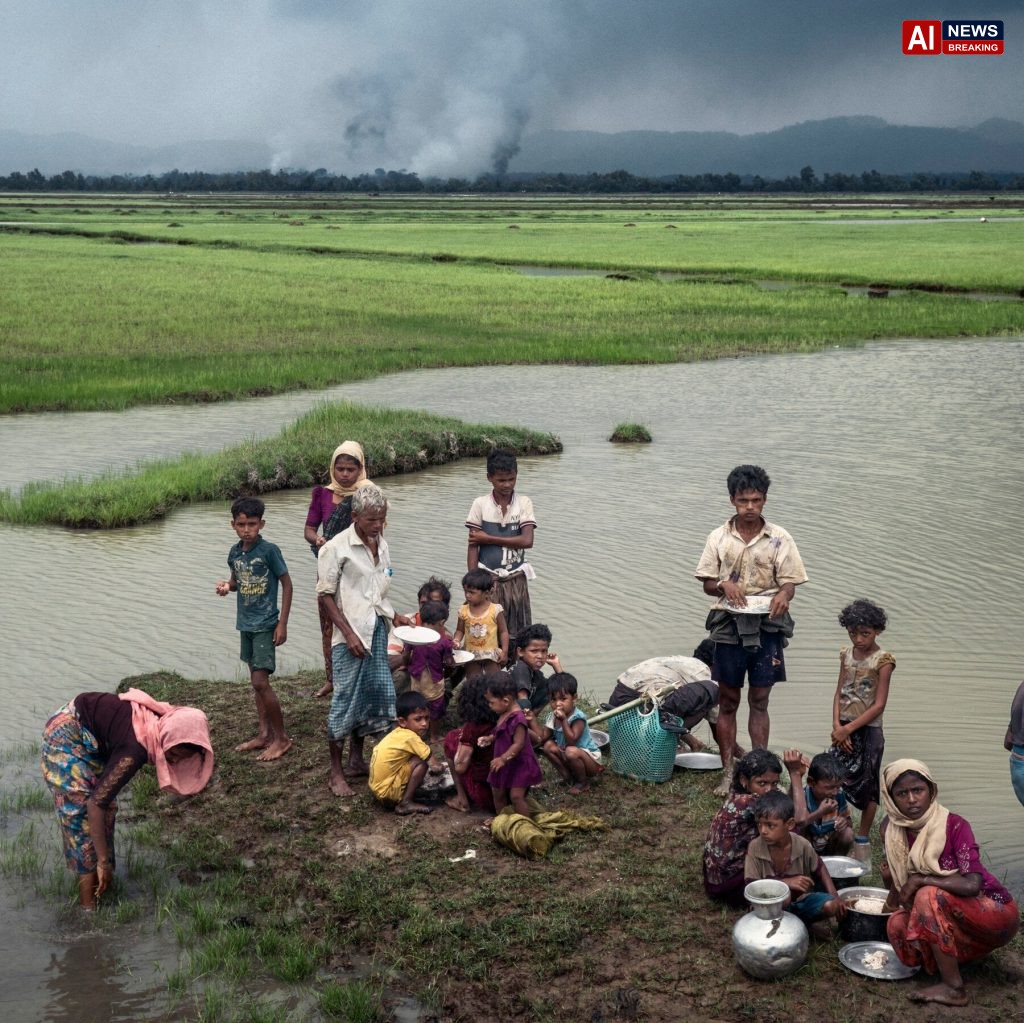
A Landmark Genocide Ruling - AI News Breaking
rules myanmar genocide sets:
The International Court of Justice’s (ICJ) recent ruling that Myanmar’s military actions constitute genocide marks a watershed moment for the development of international criminal law, reinforcing the legal obligations of states to prevent and punish mass atrocities. In a 15‑minute hearing that captured worldwide attention, the Court found that the Myanmar government had failed to fulfil its duty to protect the Rohingya minority from systematic violence, including killings, sexual assaults and forced displacement. While the judgment stops short of imposing immediate punitive measures, it establishes a binding precedent that the international community can invoke when assessing other conflicts where allegations of genocidal conduct arise..
The decision, delivered on 24 March, will now shape diplomatic strategies, humanitarian responses and, crucially, the legal arguments surrounding the ongoing war in Gaza.The case against Myanmar was brought by The Gambia, a small West African nation that has positioned itself as an advocate for the enforcement of the Genocide Convention. In 2019, The Gambia filed an application alleging that Myanmar’s armed forces, the Tatmadaw, had carried out a coordinated campaign to destroy, in whole or in part, the Rohingya ethnic group. After years of procedural wrangling, the ICJ concluded that there was sufficient evidence to establish that Myanmar had breached its obligations under the 1948 Convention on the Prevention and Punishment of the Crime of Genocide..
The Court’s majority opinion, authored by Judge Joan E. Donoghue, highlighted the systematic nature of the attacks, the intent to eradicate the Rohingya identity, and the failure of the state to intervene or punish perpetrators.Legal scholars have praised the ruling as a rare instance of the ICJ moving beyond declaratory judgments toward an actionable interpretation of genocide. “The decision clarifies that the threshold for genocide is not an abstract concept but a concrete, observable pattern of conduct,” said Dr..
Miriam Al‑Mansouri, a professor of international law at the University of Cambridge. “It also underscores the principle that states cannot hide behind sovereignty to shield themselves from accountability when they are the primary actors.” The Court’s emphasis on the duty to prevent, as well as to punish, is likely to influence future cases where governments are accused of either directly committing or facilitating mass atrocities.The implications of the ruling are already being felt in diplomatic circles as the conflict in Gaza enters its third year. Israel’s military operations, which have resulted in thousands of civilian deaths and widespread destruction of infrastructure, have prompted renewed calls for an international inquiry into possible violations of humanitarian law..
Several nations, including Brazil and South Africa, have urged the United Nations Human Rights Council to refer the situation to the ICC, while others have suggested that the ICJ could be the appropriate forum for a genocide determination. The Myanmar judgment provides a legal template that could be invoked to argue that Israel’s actions meet the criteria of genocide, particularly if evidence shows a deliberate intent to destroy a protected group, in this case the Palestinian population of Gaza.Critics, however, caution that the legal thresholds remain high and that the political context of the Gaza conflict differs markedly from the Rohingya crisis. “Genocide requires proof of specific intent to eradicate a group, not merely the tragic consequences of war,” noted Professor Ahmed El‑Sayed of the American University in Cairo..
“While the humanitarian toll is undeniable, establishing that Israel intended to destroy Palestinians as a group is a far more complex evidentiary challenge.” The ICJ’s Myanmar ruling did not resolve the contentious issue of intent, instead relying on a substantial body of documented atrocities and statements from military officials. In Gaza, the Israeli government maintains that its operations target Hamas militants and that civilian casualties are collateral damage, a defence that would need to be scrutinised under the same rigorous standards.The political ramifications of the Myanmar decision extend beyond the courtroom. In the weeks following the ruling, the United Nations Security Council saw an unprecedented surge in resolutions referencing the need for stronger mechanisms to enforce the Genocide Convention..
Although the Council remains divided, with several permanent members vetoing stronger language, the symbolic weight of the ICJ’s judgment has emboldened human rights NGOs to press for a more proactive stance. Amnesty International released a statement declaring that “the world now has a clear legal yardstick for measuring state conduct in Gaza,” urging the UN to act swiftly before further loss of life.For Israel, the prospect of an ICJ case carries both legal and diplomatic risks. Israel is not a party to the ICJ’s jurisdiction in the same way as Myanmar, which has accepted the Court’s authority under the Genocide Convention..
Nevertheless, the principle of universal jurisdiction for genocide, enshrined in the Convention, means that any state party could theoretically bring a case before the Court. The United States, a staunch ally of Israel, has historically resisted ICC jurisdiction over its actions and those of its partners, but the growing international consensus after the Myanmar ruling could shift the calculus. If a case were to be filed, Israel would likely argue that the ICJ lacks jurisdiction and that the matter should be addressed by the International Criminal Court or a UN fact‑finding mission instead.The role of evidence will be decisive in any future proceedings..
In the Rohingya case, the Court relied heavily on satellite imagery, refugee testimonies, forensic reports and leaked internal military documents. Similar forms of documentation are being compiled by Palestinian civil society groups, United Nations agencies and independent journalists operating in Gaza. Reports of targeted attacks on schools, hospitals and residential areas, combined with statements from Israeli officials about the strategic purpose of “total warfare,” may be used to argue a pattern of intent..
However, the legal community notes that intent is often inferred from a combination of actions and statements, making the burden of proof particularly demanding.The Myanmar ruling also about the enforcement of ICJ judgments. Historically, the Court has limited mechanisms to compel compliance, relying on the goodwill of states and, when necessary, the backing of the UN Security Council. In the Myanmar case, the Court ordered the government to take measures to prevent further acts of genocide and to report on steps taken, but it has no power to impose sanctions or arrest officials directly..
The effectiveness of the ruling will therefore hinge on political pressure, diplomatic isolation and the willingness of states to align their foreign policies with the Court’s findings. Observers warn that without robust enforcement, even a landmark judgment may remain symbolic rather than transformative.Nonetheless, the precedent set by the Court could influence the behavior of other states facing similar accusations. Nations with histories of internal conflict, such as Ethiopia or Sudan, may feel increased scrutiny over their treatment of minority groups..
The decision reinforces the notion that the international community can no longer turn a blind eye to mass violence, especially when the evidence points to a coordinated state policy..
Updated: November 22, 2026
The ICJ’s genocide finding against Myanmar transforms the Convention from a moral promise into a tangible benchmark, forcing states to reckon with the concrete evidentiary standards that now define “genocide” in real‑time conflicts. By supplying that template, the ruling threatens to redraw diplomatic risk maps, making the calculus of impunity far steeper for any regime whose campaigns display the same pattern of intent and systematic violence.







