
 Pakistan’s leaders hail first astronaut aboard Chinese craft: ‘Proud one of us has gone into space’
 British tourist travels 29 hours from Mumbai to Amritsar for ₹5,461, rates Indian Railways 10/10 | Viral video
 The Supreme Court will decide whether assault weapons bans violate the Second Amendment
 A Critic of Beijing Falls Short in Taiwan’s Key Mayoral Election
 EPA says no rise in contamination after Army detonates lead azide stockpile in Iowa
Mind the gap: Partial opening of Namma Metro Pink Line leaves commuters wanting
**
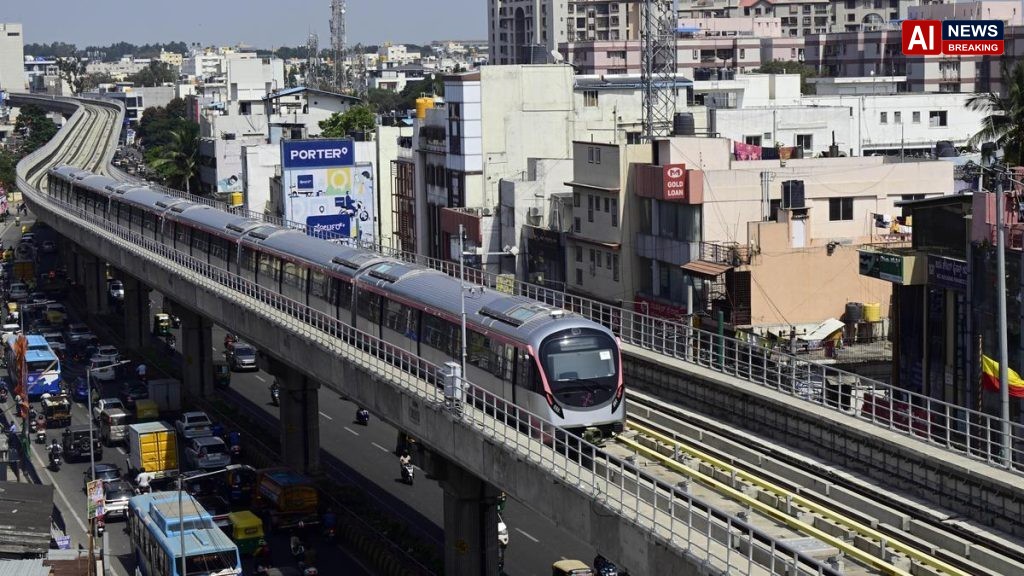
Mind the gap: Partial opening of Namma Metro Pink Line leaves commuters wanting - AI News Breaking
mind partial opening namma:
The elevated stretch of Bengaluru’s newly launched Pink Line, which now runs from Kengeri to Basavanagudi, has been welcomed by commuters who have long endured the city’s notorious traffic snarls. Yet the partial opening, announced last week by the Bangalore Development Authority, offers only a modest reprieve. A key underground segment that will link the bustling Central Business District with the northern suburbs remains unfinished, a fact that has left many residents frustrated and sceptical about the overall efficacy of the project.The decision to open the elevated section ahead of schedule was driven by a combination of political pressure and logistical necessity..
The line, which cost an estimated ₹10,000 crore to build, was slated to open in full by the end of 2024. However, unforeseen delays in tunnelling work and the late delivery of critical signalling equipment forced the authorities to roll out the elevated portion first, in an attempt to demonstrate progress and appease the public. The opening ceremony, held at Basavanagudi, was attended by several state ministers and local officials who praised the project as a “vision for a modern city.” They also promised that the underground segment would be completed “in the near future.” Critics, however, argue that such assurances have been a recurring theme in the city’s infrastructure development history.For many commuters, the elevated line does provide tangible benefits..
The 13-kilometre stretch, which traverses major roads such as the NICE and Outer Ring Road, offers a dedicated corridor that bypasses surface traffic. Surveys conducted by the local transport research institute indicate that the average travel time between Kengeri and Basavanagudi has decreased from 45 minutes to 28 minutes during peak hours. The line’s two-car trains, running at a frequency of 5 minutes, have already eased congestion on the surrounding roads, allowing buses and private vehicles to move more smoothly..
This has translated into lower fuel consumption and reduced emissions, a point highlighted by environmental groups that have been advocating for public transit expansion.Yet, the real promise of the Pink Line lies in its underground section, which is intended to cut through the densely populated and traffic‑congested areas of the city’s core. The plan is for the tunnel to emerge at the heart of the Central Business District, then proceed northwards through the congested corridors of MG Road, Brigade Road, and the Gachibowli area, eventually reconnecting with the elevated tracks. Such a route would have a profound impact on reducing travel times for thousands of daily commuters, especially those travelling from the north‑western suburbs to the commercial heart of Bengaluru..
The tunnel’s design includes state‑of‑the‑art safety features, automatic train control systems, and a dedicated emergency evacuation plan. However, the tunnelling work has stalled due to a combination of technical challenges, regulatory hurdles, and land acquisition issues. The latest update from the Bangalore Metro Rail Corporation Limited (BMRCL) indicates that the underground work is now expected to be completed by the end of next year, a delay that many commuters are finding unacceptable.The partial opening has also brought to light the issue of fare structure and accessibility..
The current fare for the elevated stretch is ₹30 for a single journey, slightly higher than the average cost on the existing Namma Metro network. This has sparked debate over whether the elevated section is truly affordable for the working class. While the BMRCL claims that the price reflects the higher construction costs and the need for rapid deployment, several advocacy groups argue that a more subsidised fare structure could encourage greater ridership and help achieve the city’s environmental and mobility goals..
Moreover, the lack of integration with existing bus routes and the absence of last‑mile connectivity options have further dampened enthusiasm among potential users.From an urban planning perspective, the Pink Line’s incomplete status underscores the need for comprehensive coordination between municipal authorities, state government agencies, and private stakeholders. The tunnel’s alignment crosses through several heritage sites, educational institutions, and commercial hubs, each with its own set of regulatory requirements and community concerns. The BMRCL has stated that it will engage with local residents and businesses to mitigate disruptions, but the process has been slow, partly due to bureaucratic red tape..
The delay has also prompted calls for a more transparent and streamlined approach to project approvals, especially for large-scale infrastructure projects that affect a significant portion of the city’s population.The city’s residents have also expressed concerns about safety and environmental impact. The elevated section’s construction involved the demolition of old shanties and the relocation of a small community, raising questions about social responsibility. While the BMRCL has assured that proper rehabilitation plans are in place, the process has been criticised for being opaque..
Environmentalists have also pointed out that the elevated tracks run over key drainage corridors, potentially disrupting stormwater flow. Although studies suggest that the impact on the city’s water system is minimal, the lack of publicised data has led to speculation that the authorities are overlooking critical environmental safeguards.Another point of contention is the connectivity of the Pink Line with the rest of the Namma Metro network. The elevated section terminates at Basavanagudi, which is served by the Green Line..
While there are plans to add a transfer hub at Basavanagudi in the future, the current configuration leaves commuters making multiple transfers between lines, reducing the overall efficiency of the metro system. The lack of an integrated fare system also complicates the travel experience, as commuters must purchase separate tickets for each line, adding both time and cost.Despite these setbacks, there are reasons for optimism. The city’s municipal corporation has announced a new budget allocation of ₹500 crore for the completion of the underground section, a significant increase over the previous fiscal year..
This influx of funds is expected to accelerate tunnelling work, especially after the procurement of a new tunnelling machine that promises faster and more efficient excavation. Moreover, the government has pledged to introduce a fare capping system across the metro network, which would limit the maximum amount a commuter pays over a week, thereby making the service more affordable.The partial opening of the Pink Line has also highlighted the importance of public communication and stakeholder engagement. The BMRCL has launched an interactive portal that allows citizens to track the progress of the tunnel, submit queries, and receive real-time updates on train schedules..
This transparency initiative, though praised by civil society groups, has yet to fully address the concerns of those directly affected by the construction. The authorities have been urged to hold more public consultations, especially in the neighbourhoods that will be impacted by the underground section’s construction.In the broader context of Bengaluru’s growth, the Pink Line’s completion is a critical component of the city’s long‑term mobility strategy. Bengaluru, now one of India’s fastest‑growing urban ag.
Updated: November 13, 2026
Bengaluru’s newly opened 13‑km elevated Pink Line eases traffic between Kengeri and Basavanagudi, cutting peak‑hour travel time to 28 minutes, yet commuters remain wary as the vital underground tunnel—meant to link the CBD with northern suburbs—is still stalled. The partial launch, driven by political urgency and logistical hurdles, has sparked debate over fare affordability, last‑mile connectivity and the need for clearer project timelines.






