
 Pond heron found dead in Coimbatore tests positive for avian influenza
 Pakistan’s leaders hail first astronaut aboard Chinese craft: ‘Proud one of us has gone into space’
 British tourist travels 29 hours from Mumbai to Amritsar for ₹5,461, rates Indian Railways 10/10 | Viral video
 The Supreme Court will decide whether assault weapons bans violate the Second Amendment
 A Critic of Beijing Falls Short in Taiwan’s Key Mayoral Election
Netanyahu urges the formation of a broad unity government to address security challenges and political divisions
**
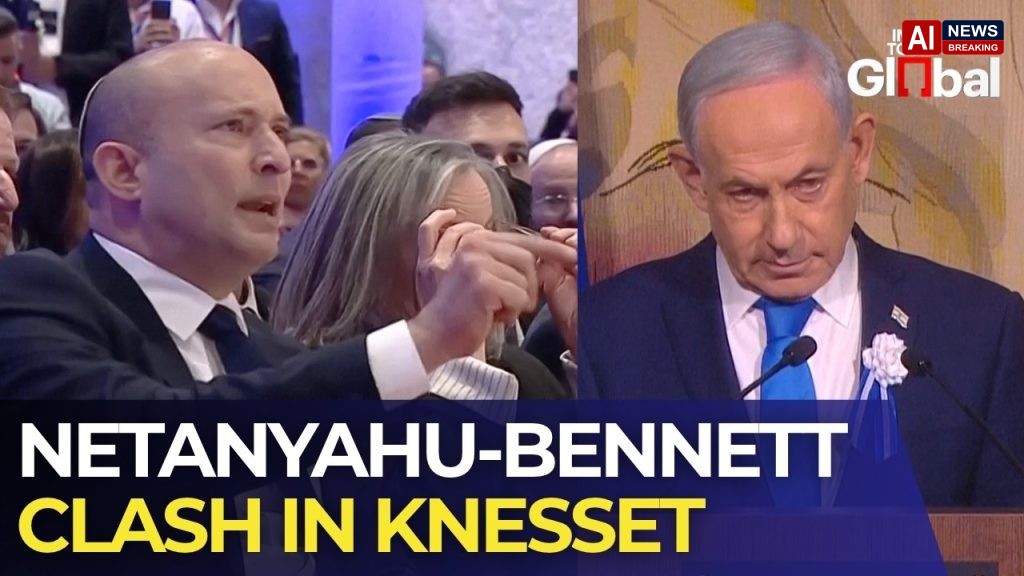
Netanyahu urges the formation of a broad unity government to address security challenges and political divisions - AI News Breaking
netanyahu urges formation broad:
Benjamin Netanyahu, Israel’s long‑standing prime minister, has called for the rapid establishment of a broad‑based unity government, arguing that the nation’s security imperatives and deepening political fissures demand a concerted response. Speaking to a packed audience in Jerusalem, the veteran leader said the country could no longer afford the paralysis that has characterised recent months, pointing to the resurgence of hostile activity along its borders, the looming threat of regional escalation and the internal discord that has eroded public confidence in the political system. “We must put aside partisan rivalry and unite behind a government that can act decisively,” Netanyahu declared, a sentiment echoed by several senior figures across the political spectrum.The appeal comes at a moment when Israel is confronting a confluence of challenges that test its strategic resilience..
In the north, Hezbollah’s renewed artillery drills and the steady flow of Iranian‑backed proxies into Lebanon have heightened the risk of a broader confrontation. Simultaneously, the Gaza Strip remains a tinderbox; sporadic rocket fire and cross‑border incursions have persisted despite intermittent cease‑fire negotiations, underscoring the fragile nature of the truce that has held since the war of 2023. In the west, the Israeli Defense Forces (IDF) have reported an uptick in smuggling attempts across the Jordan River, while cyber‑attacks targeting critical infrastructure have grown more sophisticated, suggesting a coordinated effort by hostile state and non‑state actors.Domestically, the political landscape has been equally turbulent..
The coalition that Netanyahu led since 2022 has repeatedly teetered on the brink of collapse, with disagreements over budget allocations, judicial reforms and the handling of the war in Gaza prompting several ministers to threaten resignation. The judiciary‑reform controversy, in particular, sparked nationwide protests that saw hundreds of thousands take to the streets, demanding the preservation of an independent legal system. Critics argue that the reforms would concentrate power in the executive, eroding checks and balances that have underpinned Israel’s democratic framework since its founding.Netanyahu’s call for a unity cabinet aims to bridge the divide between the right‑wing bloc that supports his security‑first approach and the centrist and left‑leaning parties that have voiced concerns over democratic backsliding..
He suggested a structure that would allocate key ministries—defence, finance, interior and foreign affairs—to representatives from across the political spectrum, thereby ensuring that policy decisions reflect a broader consensus. “A government that represents all Israelis will be better equipped to safeguard our citizens and preserve our democratic values,” he said, invoking the historic precedent of national unity administrations formed during periods of crisis.The proposition has elicited a mixed response from opposition leaders. Yair Lapid, head of the centrist Yesh Atid party, welcomed the notion of greater cooperation but cautioned that any agreement must include concrete safeguards for the rule of law..
“We can stand together against external threats, but we cannot compromise the very institutions that make Israel a liberal democracy,” Lapid warned. Meanwhile, Naftali Bennett, former prime minister and leader of the right‑wing New Hope party, expressed tentative support, emphasizing the need for a strong defence posture. “Our enemies watch our internal debates; they will exploit any sign of weakness,” Bennett asserted, reinforcing the argument that a fragmented government emboldens adversaries.International observers have noted the strategic calculus behind Netanyahu’s overture..
The United States, a key ally, has repeatedly urged Israeli leaders to present a united front, particularly as tensions with Iran intensify and as Washington seeks to maintain stability in the Eastern Mediterranean. In a recent briefing, a senior State Department official indicated that American assistance—both military and diplomatic—would be more effectively deployed through a government perceived as stable and inclusive. European capitals, too, have signaled that their willingness to engage on contentious issues such as settlement expansion and humanitarian access may hinge on Israel’s internal cohesion.Analysts caution that forming a broad coalition will be no easy feat..
Israel’s parliamentary system, with its low electoral threshold and a plethora of small parties, often leads to fragmented blocs that are difficult to reconcile. The recent Knesset elections produced a highly dispersed result, with no single party achieving a clear majority, and coalition negotiations have been marked by protracted stalemates over ministerial portfolios and policy priorities. Moreover, the ideological chasm between parties that champion a hardline security agenda and those that prioritize civil liberties could prove a stumbling block, especially on contentious issues like the proposed overhaul of the Supreme Court and the settlement policy in the West Bank.Despite these obstacles, some political insiders see a window of opportunity created by the pressing security environment..
Recent intelligence assessments, disclosed to a limited number of legislators, warned of an imminent escalation involving multiple fronts—ranging from a possible large‑scale rocket barrage from Gaza to coordinated attacks by Hezbollah in the north. Such a scenario, they argue, could compel rival factions to set aside their differences in the face of a common existential threat. “History teaches us that external danger often accelerates internal compromise,” noted a senior researcher at the Israeli Institute for National Security Studies.If a unity government materialises, its composition and policy agenda could reshape Israel’s trajectory for years to come..
Proponents argue that a diversified cabinet would bring a multiplicity of perspectives to strategic decision‑making, potentially moderating extreme positions and fostering more balanced legislation. Critics, however, warn that a coalition built on expediency rather than shared vision may be inherently unstable, leading to frequent cabinet reshuffles and policy paralysis at critical moments. The balance between maintaining a robust defence posture and upholding democratic norms will likely dominate the internal debate for the foreseeable future.Netanyahu’s appeal thus arrives at a crossroads where security imperatives intersect with democratic integrity, and where the pressure to act swiftly collides with the need for thorough deliberation..
As Israel’s political actors begin the arduous task of negotiating a unity framework, the nation watches closely, aware that the outcome will not only dictate the country’s capacity to confront immediate threats but also determine the health of its democratic institutions. In a region fraught with volatility, the hope expressed by the prime minister—that collective responsibility can eclipse partisan rivalry—remains both a pragmatic necessity and a test of Israel’s enduring commitment to pluralistic governance..
Updated: November 11, 2026
If Israel succumbs to a fragile, expediency‑driven unity cabinet, its military might may be bolstered, yet the very fragility could erode the checks that kept the nation’s democracy in balance—turning a momentary crisis into a long‑term structural weakness. This gamble forces Israel to choose between a hardened security posture and a resilient, pluralistic polity that can withstand future shocks.





