
 Pakistan’s leaders hail first astronaut aboard Chinese craft: ‘Proud one of us has gone into space’
 British tourist travels 29 hours from Mumbai to Amritsar for ₹5,461, rates Indian Railways 10/10 | Viral video
 The Supreme Court will decide whether assault weapons bans violate the Second Amendment
 A Critic of Beijing Falls Short in Taiwan’s Key Mayoral Election
 EPA says no rise in contamination after Army detonates lead azide stockpile in Iowa
How the War in Iran Will Remake the Global Energy Order
**
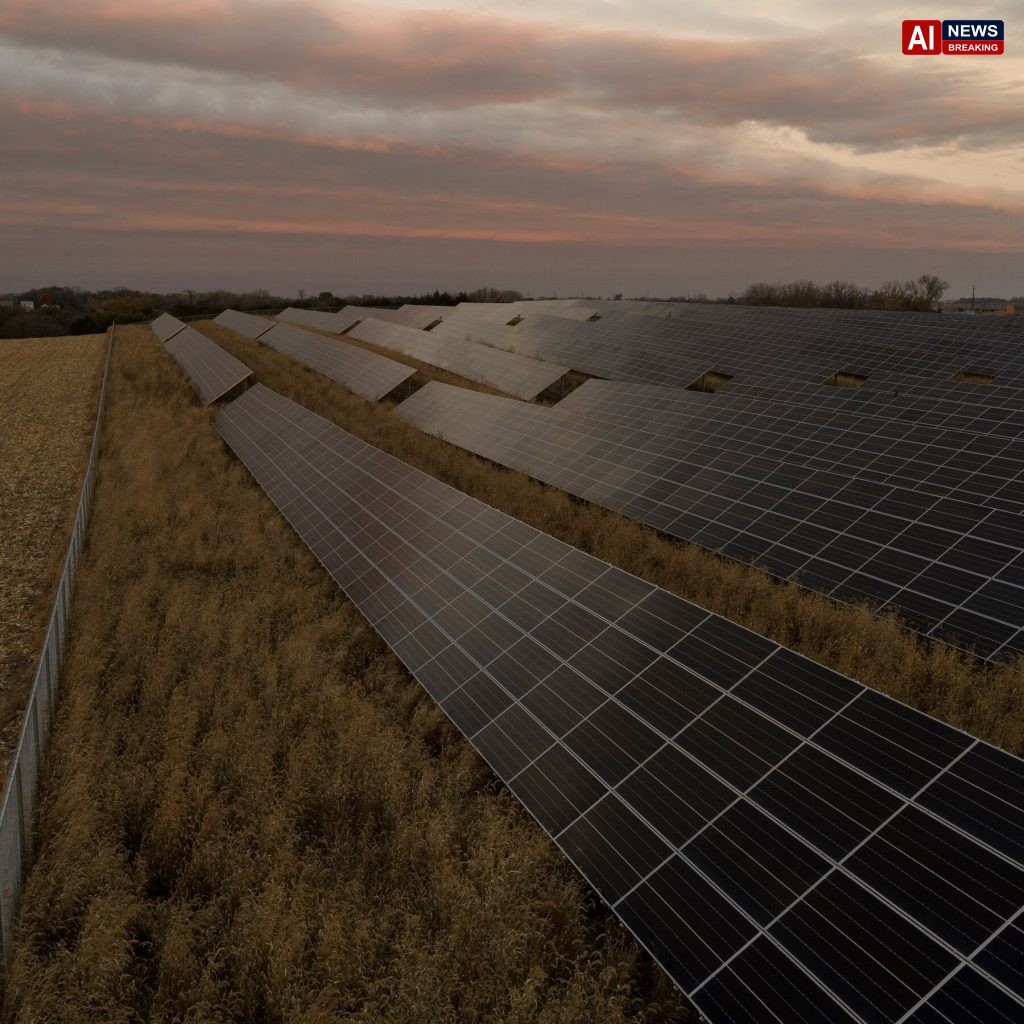
How the War in Iran Will Remake the Global Energy Order - AI News Breaking
iran will remake global:
Title: How the War in Iran Will Remake the Global Energy Order 1 The International Energy Agency’s latest report, released on Tuesday, paints a stark picture of how the current conflict in Iran could reshape the world’s energy landscape. The IEA, long regarded as the definitive authority on global energy policy, warns that a sustained oil shock could push nations to accelerate the adoption of alternative power sources. In its 180‑page analysis, the agency estimated that a 15 % drop in Iranian oil output would trigger a 3‑year acceleration in renewable deployment, with implications for everything from electricity grids to vehicle fleets..
2 Iran’s strategic position as one of the world’s largest oil exporters has always given the country disproportionate influence over Middle‑East supply chains. The war, now in its fourth month, has already forced the United States and its allies to re‑evaluate the reliability of this supply. According to IEA data, global oil prices surged by 12 % in the past week alone, a rise that the agency attributes to heightened uncertainty and to the re‑routing of pipelines through politically volatile corridors..
The report argues that this volatility could finally break the long‑standing lock‑step between fossil fuel dependence and economic growth. 3 The report’s most striking finding is the projected acceleration of renewable investment. The IEA estimates that a 20 % increase in renewable capacity will be needed by 2035 to offset the expected shortfall in oil supply..
Solar and wind projects in Europe, Asia and North America are already in the pipeline, but the report calls for a “policy‑induced sprint” in financing and grid upgrades. “We’re looking at a new era of investment,” says IEA chief economist Dr. Elena Morales, who notes that the war’s ripple effects are already encouraging governments to revisit long‑term energy plans..
4 One of the report’s key insights is the potential for a “green rebound” in the United States. The country’s recent shift to electric vehicles has been slowed by supply‑chain disruptions, but the IEA forecasts a surge in domestic battery production as firms seek to reduce dependence on foreign minerals. The agency projects that the U.S..
could increase lithium‑ion battery manufacturing by 30 % over the next five years. This shift would not only stabilize domestic supply but could also reduce global oil demand, further accelerating the transition to renewables. 5 Europe, already a leader in carbon neutrality, may find its ambitions accelerated by the Iranian conflict..
The IEA’s analysis shows that European Union member states could see a 15 % uptick in wind‑farm deployment if oil prices remain elevated. This would be a significant step toward the EU’s 2030 climate target. However, the report also warns that the increased demand for wind turbines and offshore infrastructure will place pressure on supply chains, potentially leading to a “green supply crunch” that could delay project timelines..
6 On the supply side, the war has forced many oil‑rich countries to reconsider their strategic reserves. Iran’s refusal to export crude has prompted the United Arab Emirates and Saudi Arabia to announce plans to increase their own storage facilities by 10 % each. The IEA notes that these moves could temporarily mitigate price spikes, but long‑term reliance on strategic reserves is unsustainable..
“Strategic reserves are a short‑term safety net,” the report says. “The real solution lies in diversifying energy portfolios and investing in renewables.” 7 The conflict’s impact on natural gas markets is also significant. Iran is a major gas exporter, and the war has led to a 20 % decline in gas volumes..
The IEA projects that countries like the United Kingdom and Germany will need to look beyond LNG contracts and invest in domestic renewable gas production. This could involve expanding biogas and hydrogen facilities, the agency argues, turning the crisis into an opportunity for a cleaner gas sector. 8 Beyond the immediate economic ramifications, the war has the geopolitical vulnerabilities of the current energy system..
The IEA’s report underscores that the reliance on a handful of geopolitical hotspots makes the global economy susceptible to shocks. It calls for a “distributed energy model” that would reduce the concentration of oil and gas production in conflict-prone regions. The report’s recommendations include a 25 % increase in renewable capacity in emerging economies, thereby ensuring energy security and reducing geopolitical friction..
9 The report also highlights the role of technological innovation in this transition. Advances in battery storage, smart grid technology and carbon capture are positioned to become game‑changers. The IEA forecasts that storage capacity could rise by 40 % globally by 2035, largely driven by the need to balance intermittent renewable output..
“Innovation is the engine that will turn this crisis into an opportunity,” says Dr. She notes that governments must fund research and development to keep the transition on track. 10 Yet the transition will not be without its challenges..
The IEA warns that the sudden shift to renewables could create significant employment disruptions in the oil and gas sector. In countries heavily dependent on fossil‑fuel exports, the report calls for retraining programmes and social safety nets. “We cannot allow a smooth transition to become a painful one,” the report cautions..
The agency suggests that a phased approach, combined with strong social policies, will be essential to maintain economic stability. 11 International cooperation is also highlighted as a linchpin of the transition. The IEA’s analysis indicates that coordinated policy frameworks—particularly in the areas of carbon pricing and technology transfer.
Updated: November 19, 2026
The war forces oil‑heavy economies to fast‑track clean tech, turning a geopolitical flashpoint into a catalyst for grid modernisation and battery production that could outpace the current fossil‑fuel boom. Yet this rapid shift risks hollowing out jobs in traditional sectors, demanding a state‑led retraining agenda







