
 Pakistan’s leaders hail first astronaut aboard Chinese craft: ‘Proud one of us has gone into space’
 British tourist travels 29 hours from Mumbai to Amritsar for ₹5,461, rates Indian Railways 10/10 | Viral video
 The Supreme Court will decide whether assault weapons bans violate the Second Amendment
 A Critic of Beijing Falls Short in Taiwan’s Key Mayoral Election
 EPA says no rise in contamination after Army detonates lead azide stockpile in Iowa
Drone Hits Dutch Embassy Compound in Kyiv, Ukrainian Officials Say
**
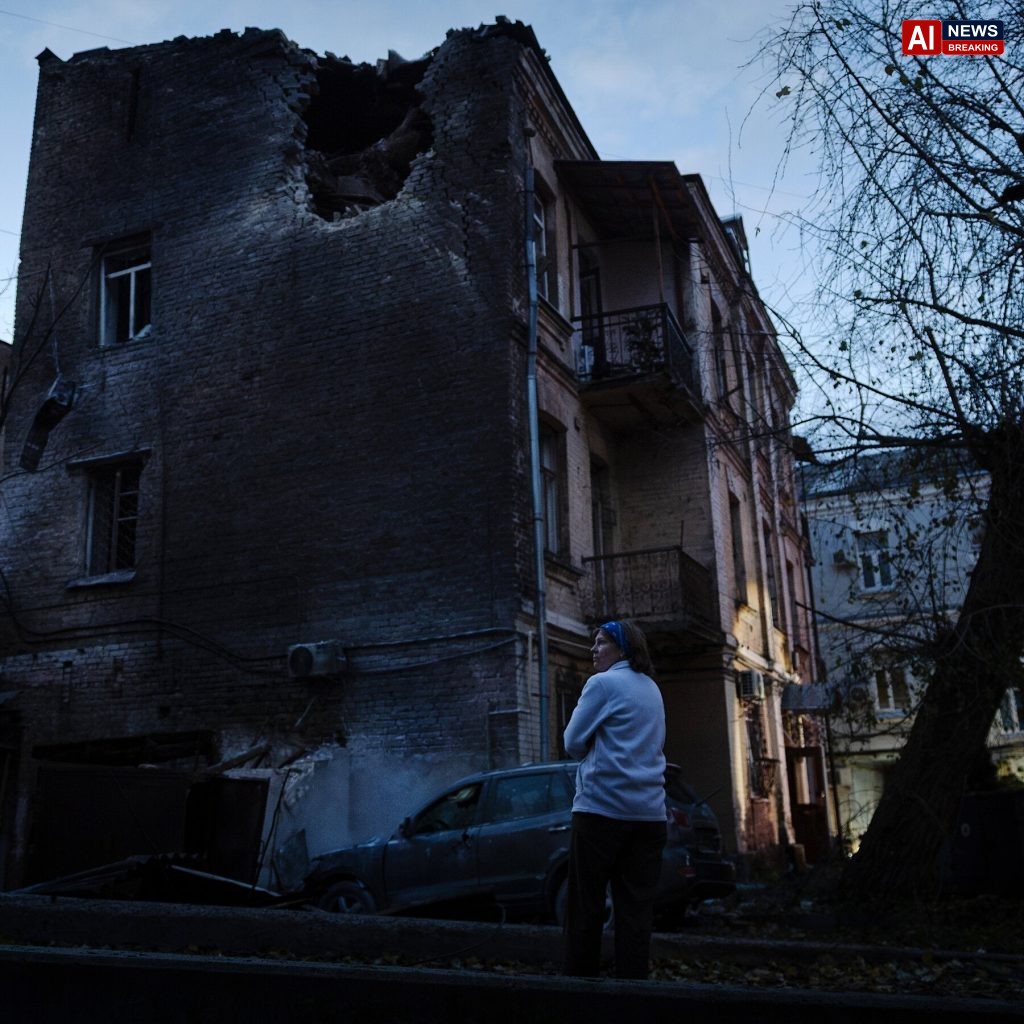
Drone Hits Dutch Embassy Compound in Kyiv, Ukrainian Officials Say - AI News Breaking
The night of Thursday, 1 December, the quiet streets of Kyiv’s central district were punctuated by the sound of a sudden impact. A drone or small unmanned aerial vehicle, according to Ukrainian authorities, released a projectile that struck a building just behind the Dutch Embassy compound on Khreshchatyk Street. Witnesses reported hearing a metallic clang followed by a brief explosion, but emergency services confirmed that no one was injured and that the damage was limited to the exterior of the structure.Ukrainian officials have been swift to respond to the incident, emphasizing that it represents a new escalation in the series of attacks on the city’s diplomatic premises..
The Ukrainian Foreign Ministry issued a statement late on Friday, noting that the Dutch Embassy had not been targeted directly, and that the projectile had missed the ambassador’s residence itself. The Ministry also warned that the incident could be part of a broader campaign aimed at destabilising diplomatic confidence in the capital.The Dutch Embassy has long been a symbol of the bilateral relationship between the Netherlands and Ukraine, which has been under strain since the 2022 invasion. The embassy’s location on Khreshchatyk, a main artery of Kyiv’s business district, makes it a strategic target for hostile actors..
Dutch Ambassador Mark Luyten, who had been in the city since early 2023, issued a statement via the embassy’s Twitter account on Saturday, stating that while the incident was “unfortunate and regrettable,” no personnel were harmed, and that the embassy would continue to operate normally.The incident is part of a wave of drone and missile attacks that Russia has been conducting on Ukrainian territory since the invasion began last year. The latest offensive, launched on Thursday, included over 100 missile strikes on various sites around Kyiv, including military headquarters, transportation hubs, and infrastructure facilities. According to the Ukrainian Ministry of Defence, the attack involved a mix of guided and unguided munitions, many of which were believed to have been launched from artillery batteries located in the eastern part of the country.The use of drones and other unmanned systems has become a staple of Russian offensive operations, allowing for more precise strikes while limiting the risk to their own pilots..
In recent weeks, the Russian military has increased the frequency and intensity of these operations, targeting not only military assets but also civilian and diplomatic structures. The drone strike on the Dutch Embassy compound is the first such attack on a Western embassy in Kyiv in the current conflict.Analysts have long warned that the targeting of embassies and consular facilities is a violation of international law, particularly the Vienna Convention on Diplomatic Relations, which provides for the inviolability of diplomatic premises. However, the reality of the conflict has blurred the line between military and civilian targets, with Russia repeatedly citing strategic reasons for attacking locations they claim to be “dual-use” facilities..
In the case of the Dutch Embassy, the location of the building behind the compound, which houses offices for various EU agencies, might have been deemed a legitimate target by Russian command, though such a designation is questionable under international norms.Ukrainian security services have increased their vigilance in the city following the incident. The police force in Kyiv has reportedly deployed additional drones of their own to monitor the airspace over the city, hoping to intercept future hostile devices. At the same time, the Ukrainian military has urged diplomatic missions to take precautions, including the possible relocation of sensitive staff to secure locations or the use of underground facilities..
The Ministry of Foreign Affairs has been in constant contact with embassies across the city to assess the situation and to provide guidance on security protocols.The incident has prompted the European Union to issue a statement calling for the cessation of such attacks on diplomatic premises, stressing that they undermine international stability and threaten the safety of foreign nationals. EU foreign policy chief Josep Borrell said in a brief press release that the EU remains committed to protecting its diplomatic missions in Ukraine, while also condemning what it described as “unacceptable aggression” from Russia. The EU also announced that it would increase its logistical and security support to embassies in Kyiv, providing them with additional resources for air surveillance and emergency response.The Netherlands has responded by increasing the security presence at its embassy, deploying additional armed guards and installing new perimeter fencing..
The Dutch Ministry of Foreign Affairs has issued an advisory to Dutch citizens and businesses in Ukraine, warning them to avoid public gatherings and to remain vigilant in the event of further attacks. In a televised interview, Ambassador Luyten reiterated that while the incident was “disconcerting,” he was confident in the Dutch government’s ability to protect its nationals and staff.The Ukrainian government has also intensified its efforts to hold Russia accountable for the ongoing attacks. The National Security and Defense Council of Ukraine, led by Prime Minister Denys Shmyhal, has called for a new international investigation into the pattern of drone strikes..
Shmyhal stressed that each attack on a diplomatic compound, however small, is a blatant disregard for the established norms of war. He appealed to the United Nations Security Council to address the issue, citing the need for a coordinated international response to ensure the safety of diplomatic missions worldwide.While the Dutch Embassy remains largely intact, the incident has raised concerns about the potential for escalation. Some security experts point to the possibility that Russia may use the drone strikes to create a pretext for further military action in the city, potentially targeting other embassies or even launching larger airstrikes against civilian infrastructure..
The Ukrainian leadership has reportedly convened emergency security meetings to assess the risk and to coordinate with allied forces, including NATO partners, who have pledged to support Ukraine’s defensive efforts against Russian aggression.The long-term implications of this incident are still unfolding. If the pattern of attacks on diplomatic missions continues, it could lead to a broader breakdown of diplomatic engagement and a chilling effect on foreign investment and cooperation in Ukraine. At the same time, it may also galvanise international support for Ukraine, with more countries potentially offering military and humanitarian aid..
In the immediate term, Ukrainian authorities will likely continue to monitor the situation closely, ensuring that the city’s airspace is secure and that diplomatic premises remain safe for foreign personnel.The incident has also reignited debates within the international community about the role of unmanned systems in modern warfare. While drones provide strategic advantages to a state with a large arsenal, their use raises serious questions about proportionality and civilian protection. The situation underscores the necessity for a robust international legal framework that addresses the deployment of such technologies in conflict zones.As the world watches, Kyiv remains a focal point for both military and diplomatic tensions..
The Dutch Embassy’s experience serves as a stark reminder that the conflict has spilled into realms traditionally protected by international law. Whether this marks a turning point in the conduct of hostilities or merely a continuation of an already chaotic war will depend.
Updated: November 19, 2026
The drone strike near the Dutch Embassy signals Russia’s willingness to blur the line between military and diplomatic targets, using “dual‑use” claims to justify attacks that undermine international norms. This move could force Western missions to adopt fortress‑like security, potentially isolating Kyiv from global diplomatic engagement and reshaping how







