
 Pond heron found dead in Coimbatore tests positive for avian influenza
 Pakistan’s leaders hail first astronaut aboard Chinese craft: ‘Proud one of us has gone into space’
 British tourist travels 29 hours from Mumbai to Amritsar for ₹5,461, rates Indian Railways 10/10 | Viral video
 The Supreme Court will decide whether assault weapons bans violate the Second Amendment
 A Critic of Beijing Falls Short in Taiwan’s Key Mayoral Election
Govt extends medical devices PLI to 2035–36, relaxes rules to spur investment
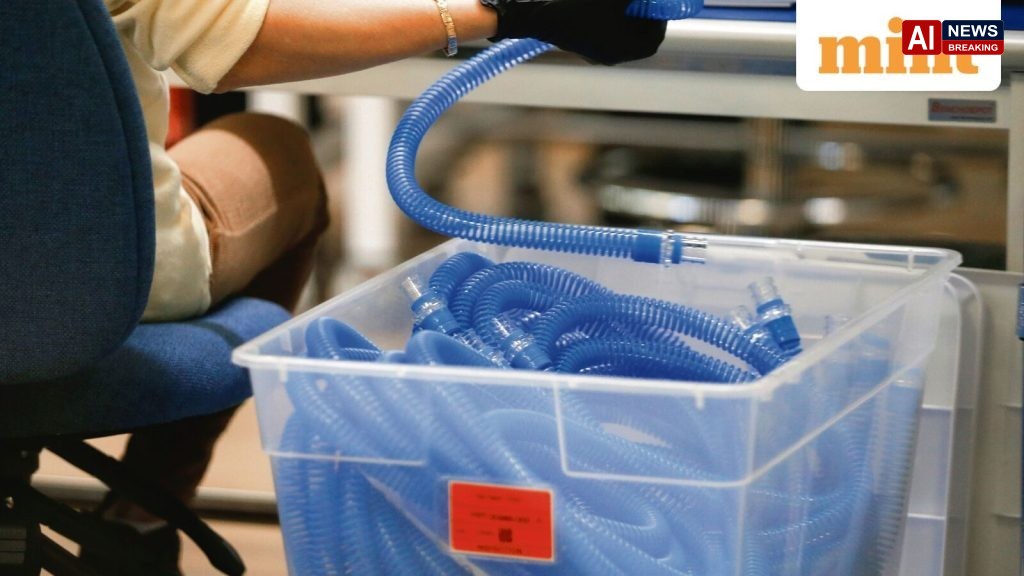
Govt extends medical devices PLI to 2035–36, relaxes rules to spur investment - AI News Breaking
Govt extends medical devices PLI to 2035–36, relaxes rules to spur investment The Ministry of Commerce announced on Monday that India’s Production‑Linked Incentive (PLI) scheme for medical devices will now run until the fiscal year 2035‑36, a full decade longer than originally planned. The move, part of a broader push to “Make in India” in the health‑care sector, comes with a suite of rule‑relaxations aimed at widening eligibility and attracting fresh capital. Officials say the extended timeline and softened criteria will deepen domestic supply chains, reduce dependence on imports and position the country as a global hub for advanced medical‑technology manufacturing..
Under the revised framework, manufacturers of “critical components” – such as precision sensors, high‑performance alloys and specialized polymers – will qualify for incentives even if they do not produce a finished device. The change reflects a shift in policy focus from end‑products to the upstream ecosystem that underpins them. Analysts note that this could spur the development of a robust ancillary industry, creating jobs and fostering innovation in areas previously dominated by foreign suppliers..
The incentive structure itself remains largely unchanged: firms can claim a cash rebate of up to 30 % of incremental sales over a five‑year base period, subject to caps that vary by product category. However, the government has introduced a tiered multiplier for companies that achieve “strategic localisation” targets, rewarding those that source at least 70 % of their inputs domestically. This is intended to accelerate the transition from a largely import‑dependent market – which currently relies on the United States, Germany and Japan for high‑end devices – to a self‑sufficient ecosystem..
To qualify, firms must now demonstrate a minimum of INR 100 crore in annual turnover, a reduction from the previous INR 250 crore threshold. The lower bar is expected to open the programme to a larger pool of small‑ and medium‑size enterprises (SMEs) that have struggled to meet the earlier financial criteria. Industry bodies such as the Indian Medical Device Manufacturers’ Association (IMDMA) welcomed the move, saying it could unleash a wave of entrepreneurship and “democratise” access to government support..
The policy also eases the “net‑export” requirement that previously mandated at least 20 % of production be sold abroad to claim incentives. Companies can now opt for a “domestic‑first” model, provided they meet a minimum localisation ratio for critical components. This flexibility acknowledges the reality that many Indian hospitals still source imported equipment, while simultaneously encouraging manufacturers to target export markets in the longer term..
In addition to financial incentives, the Ministry announced a new “Advanced Equipment” fund of INR 5,000 crore to subsidise the acquisition of state‑of‑the‑art machinery for R&D and pilot production. The fund will be administered through a competitive grant process overseen by the Department for Promotion of Industry and Internal Trade (DPIIT). Officials said the grant will prioritize technologies such as additive manufacturing, AI‑driven quality inspection and robotics, which are seen as essential for moving up the value chain..
The extended PLI scheme also dovetails with the government’s recent “National Health Stack” initiative, which seeks to digitise health‑care delivery and create a unified data ecosystem. By fostering local production of interoperable devices – from wearable monitors to tele‑medicine kits – the PLI is expected to feed directly into the digital health agenda, reducing reliance on foreign firmware and proprietary standards. Critics, however, warn that without stringent data‑security guidelines, the rush to localise could introduce new vulnerabilities..
Economic advisers estimate that the PLI could generate up to 150,000 jobs by 2035, with a cumulative investment of roughly INR 1.2 lakh crore (US$ 1.4 billion) across the sector. The World Bank’s latest country report flags the medical‑devices market as a “high‑growth” segment, forecasting a compound annual growth rate of 13 % through 2030. By aligning incentives with this trajectory, the government hopes to capture a larger share of the projected US$ 70 billion global market for advanced diagnostics and therapeutic equipment..
Foreign investors have taken note. A consortium led by a Japanese conglomerate and a Swiss biotech firm announced plans to set up a joint venture in Bengaluru, citing the extended PLI as a key factor in their decision. The venture aims to produce next‑generation imaging systems that combine AI analytics with high‑resolution optics – a product class that currently sees minimal Indian manufacturing capacity..
Such collaborations could also facilitate technology transfer, a longstanding goal of the Make in India programme. Nevertheless, some industry insiders caution that the success of the scheme will depend on the speed and clarity of regulatory approvals. The Central Drugs Standard Control Organisation (CDSCO) has pledged to streamline device licensing, but past delays have frustrated manufacturers seeking to bring innovations to market quickly..
In response, the Ministry has set up an “expedited review cell” that will fast‑track applications linked to PLI‑eligible projects, aiming to cut approval timelines from an average of 12 months to six. Consumer groups have welcomed the prospect of cheaper, locally made medical equipment, arguing that reduced import reliance could lower costs for patients and public hospitals. However, they stress that quality standards must not be compromised in the quest for volume..
The Ministry has reiterated that all PLI‑supported products will be subject to the same stringent safety and efficacy benchmarks as imported devices, with periodic audits to enforce compliance. The extended scheme arrives at a time.
Updated: November 10, 2026
Extending the PLI to 2035-36 signals a long‑term pivot toward self‑reliance, positioning India not just as a downstream assembler but as a full‑stack innovator that can dictate global standards. Yet, without tightening regulatory oversight, the rush to localise risks diluting quality, potentially undermining patient trust while inviting scrutiny from both domestic consumers and international partners.






