
 Pond heron found dead in Coimbatore tests positive for avian influenza
 Pakistan’s leaders hail first astronaut aboard Chinese craft: ‘Proud one of us has gone into space’
 British tourist travels 29 hours from Mumbai to Amritsar for ₹5,461, rates Indian Railways 10/10 | Viral video
 The Supreme Court will decide whether assault weapons bans violate the Second Amendment
 A Critic of Beijing Falls Short in Taiwan’s Key Mayoral Election
Syria Weighs Sending Troops to Aid Saudi War With Houthis
**
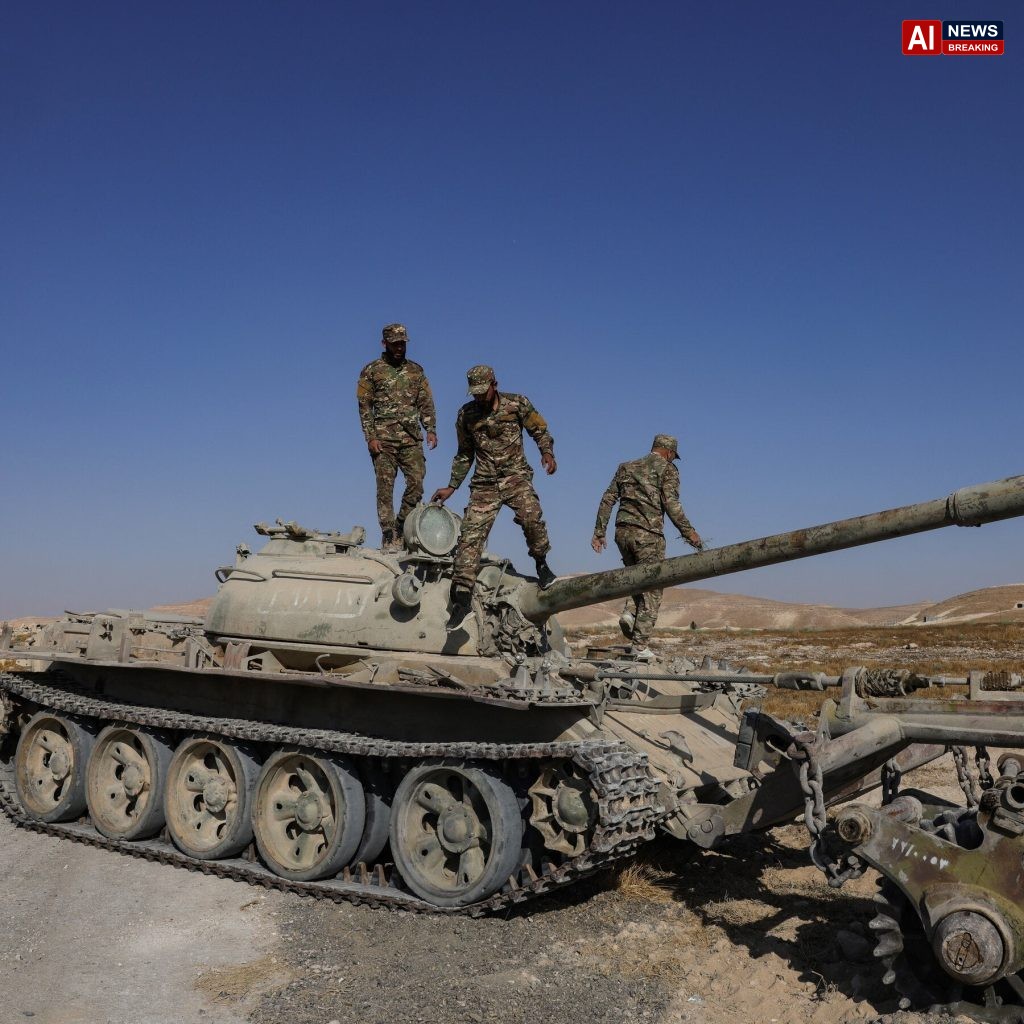
Syria Weighs Sending Troops to Aid Saudi War With Houthis - AI News Breaking
Syrian officials confirmed this week that reconnaissance teams have been dispatched to Saudi Arabia and Yemen as part of a feasibility study for a possible military deployment, but they stressed that no final decision has been taken. The move, which would see Damascus potentially joining the Saudi-led coalition fighting the Houthi rebels in Yemen, marks a significant shift in a regional alliance that has long been defined by mutual suspicion and divergent interests. Analysts say the initiative reflects both the evolving calculus of Syrian foreign policy under President Bashar al‑Assad and the deepening strategic ties between Damascus and Riyadh, forged in the wake of the Syrian civil war and the broader realignment of Middle‑East powers.The reconnaissance missions, according to sources within the Syrian Ministry of Defense, involved small teams of senior officers and intelligence officers who arrived in Saudi Arabia on short‑term visas in early October..
Their itinerary included meetings with Saudi military planners, visits to forward operating bases near the Red Sea, and a brief inspection of logistical facilities in the port city of Jeddah. A parallel delegation travelled to the Houthi‑controlled areas of northern Yemen to assess terrain, supply routes and the feasibility of joint operations with Saudi forces. While the Syrian side described the trips as “preliminary fact‑finding,” Saudi officials declined to comment on the specifics, reiterating only that Riyadh welcomes “any partner willing to contribute to the restoration of stability in Yemen.”The prospect of Syrian troops joining the coalition raises a number of diplomatic and operational questions..
Syria’s military, which has been rebuilt after a decade of civil war, is still heavily reliant on Russian equipment, Iranian advisors and a cadre of militia groups that operate under varying degrees of central control. Integrating these forces into a Saudi‑led command structure would require extensive coordination, not least because the coalition has historically been wary of Iranian influence in Yemen, a factor that has complicated its campaigns against the Houthis for years. Moreover, the Syrian army’s experience has largely been confined to urban and mountainous combat in the north of the country, whereas the Yemeni theatre demands expertise in desert warfare, naval interdiction and counter‑insurgency operations across a fragmented landscape.For Riyadh, the outreach to Damascus can be read as an attempt to broaden the coalition’s political base and to signal a united front against the Houthi movement, which it accuses of acting as a proxy for Iran..
The Saudi leadership has faced mounting criticism for the protracted nature of the conflict, which has resulted in a humanitarian crisis affecting millions of civilians. By courting Syria, the kingdom may hope to demonstrate that the war enjoys wider regional support, thereby countering narratives that portray it as a narrow Saudi venture. Additionally, the potential involvement of Syrian forces could free up Saudi troops for other priorities, including the ongoing tensions along its borders with Iraq and the broader competition with Iran for influence in the Gulf.Syria’s motivation for entertaining the prospect of intervention is equally complex..
Since the decisive turn of events in 2019, when Russian and Iranian-backed forces reclaimed most of the country from rebel groups, Damascus has sought to re‑establish its standing on the Arab stage. Re‑engagement with Saudi Arabia, a former adversary that had supported opposition elements during the civil war, signals a pragmatic approach to regional politics. By offering assistance in Yemen, Assad hopes to secure economic concessions, such as the reopening of trade corridors and the restoration of oil shipments that have been restricted by Saudi sanctions..
Moreover, involvement in the coalition could provide the Syrian military with valuable combat experience and an opportunity to showcase its renewed capabilities to both allies and rivals.The decision, however, is not without domestic risks for the Syrian government. The war in Yemen is widely perceived in the Arab world as a proxy battle between Saudi Arabia and Iran, and Syrian participation could be construed as a tacit alignment with Riyadh against Tehran. While the Assad regime maintains close ties with Iran, it has also been navigating a delicate balancing act, attempting to extract economic benefits from both sides without fully alienating either..
A deployment could strain the relationship with Tehran, which might view Syrian involvement as a betrayal of the axis that has sustained Damascus through years of isolation. Iranian officials have not yet issued a public statement, but insiders suggest that Tehran would likely oppose any Syrian commitment that deepens the kingdom’s foothold in a theatre where Iranian-backed forces have a vested interest.International reactions are being watched closely. The United Nations, which has repeatedly called for a ceasefire and a negotiated settlement in Yemen, has warned that the introduction of additional foreign troops could exacerbate an already volatile situation..
Washington, which provides logistical support to the Saudi-led coalition, has expressed cautious approval of any effort that could help bring the conflict to a swift conclusion, but it has also underscored the need for adherence to international humanitarian law. European capitals, meanwhile, have reiterated calls for a political solution and have warned that further militarisation may undermine the fragile peace talks currently mediated by the UN in Geneva.Economic considerations also weigh heavily on the calculus. Syria’s war‑torn economy, still reeling from sanctions and the destruction of infrastructure, stands to gain from any arrangement that unlocks access to Saudi capital, investment and the possibility of resuming oil exports via the Red Sea..
In recent months, Riyadh has signaled a willingness to discuss the lifting of certain sanctions in exchange for concrete steps toward normalising relations. A Syrian contribution to the Yemen campaign could be presented as a quid pro quo, providing the kingdom with leverage to demand concessions on issues ranging from the repatriation of Syrian refugees to the reopening of trade routes through the Gulf.Opposition voices within Syria caution against overextending the military. Veteran commanders who have overseen the reconstruction of the armed forces argue that redeploying troops abroad could divert resources from essential domestic priorities, such as rebuilding roads, schools and health facilities..
They also warn that involvement in a foreign conflict could reignite sectarian tensions at home, particularly if casualties mount and the public perceives the deployment as serving foreign interests rather than national security. The Syrian government, however, has maintained that the operation would be limited in scope and that any forces sent would be accompanied by robust logistical support to minimise strain on domestic capabilities.The broader geopolitical landscape adds another layer of complexity. The Red Sea, a vital maritime artery for global trade, has witnessed a surge in incidents involving Houthi missile and drone attacks on commercial shipping, prompting concerns from the international shipping community..
An expanded coalition presence, potentially bolstered by Syrian troops, could enhance the security of these sea lanes, a point that aligns with the strategic interests.
Updated: November 10, 2026
By sending reconnaissance teams to Saudi Arabia, Syria signals a pragmatic pivot that could re‑anchor it within the Arab mainstream, trading its long‑standing alliance with Iran for economic reprieve and a foothold in a regional power play.
Yet this move risks entangling Damascus in a proxy war that could provoke Tehran’s ire, strain its own war‑torn resources, and provoke domestic backlash if the Yemen gambit is seen as an extension of foreign ambitions rather than a national necessity.







